1
Application and Technology
Features
These versatile NI high-speed voltage output devices commonly replace several kinds of instruments including stand-alone proportional integral derivative (PID) controllers,
low-speed arbitrary waveform generators, and function generators.
Waveform Generation
These devices are capable of updating at rates up to 1 MS/s, giving you the ability to generate waveforms up to 500 kHz. When using these devices, you have complete control of
each data point that is updated on the output for each channel. This feature is significant because you can define not only common waveforms such as square, sine, or sawtooth
but also complex waveforms. For instance, you are able to create a sine wave that is overlaid with noise in which the amplitude and noise shape are user-defined. In practice, the
waveform is defined in a software buffer, within PC memory, and is streamed to the voltage output device using direct memory access (DMA) data transfers. Using DMA transfers,
the amount of memory located on board the voltage output device is minimized and swapped with inexpensive PC memory.
Real-Time Control
You can use NI high-speed voltage output devices with the NI LabVIEW Real-Time Module to deliver real-time, deterministic control loop execution. Because they are compatible
with LabVIEW Real-Time, common control algorithms, such as PID, are simple to implement but, more importantly, you may prototype and implement complex, cutting-edge
control algorithms as well. High-performance control, on the order of eight PID loops running in excess of 20 kHz each, is possible with this combination of hardware and software.
Each high-speed voltage output device offers multichannel simultaneous updates and hardware-timed single-point updates.
Multidevice Synchronization
Each high-speed voltage output device offers the ability to be master or slave of a multidevice timing and triggering system. Use integration technologies such as the RTSI bus,
PXI trigger bus, and PFI pins to trigger and synchronize to a wide variety of I/O types. These I/O types range from analog input, image acquisition, motion control, and high-speed
digitizers to multifunction data acquisition devices. With these integration infrastructures, you can create powerful, custom test and control systems with ease.
Measurement Services Software
National Instruments measurement services software, built around NI-DAQmx driver software, features intuitive application programming interfaces, configuration tools, I/O
assistants, and other tools designed to reduce system setup, configuration, and development time. This software,
part of your data acquisition purchase, includes helpful features such as:
Automatic code generation – The DAQ Assistant is an interactive guide that helps you navigate through configuring, testing, and programming analog output tasks and
automatically generates the necessary code for NI LabVIEW, LabWindows/CVI, and Measurement Studio software.
Cleaner code development – Basic and advanced software functions have been combined into one easy-to-use yet powerful set to help you build cleaner code and move
from basic to advanced applications without replacing functions.
High-performance driver engine – NI-DAQmx delivers maximum I/O system throughput with a multithreaded driver.
Test panels – With the NI Measurement & Automation Explorer (MAX) configuration utility, you can test all of your module functionality before you begin development.
Scaled channels – Easily scale your voltage data into the proper engineering units using the NI-DAQmx measurement-ready virtual channels by choosing from a list of
common sensors and signals or creating your own custom scale.
LabVIEW integration – All NI-DAQmx functions create the waveform data type, which carries acquired data and timing information directly into more than 400 LabVIEW built-in
analysis routines for display of results in engineering units on a graph.
NI-DAQmx Base Driver
NI-DAQmx Base (available at ni.com/downloads) offers Mac OS X and Linux users a programming interface similar to NI-DAQmx. It features ready-to-use LabVIEW VIs and C
function features similar to those included in NI-DAQmx driver software.
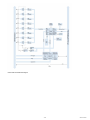
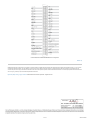
NI DAQCard-6715 Hardware Block Diagram
2/17
www.ni.com