1
ENGLISH (Original instructions)
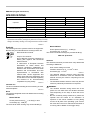
SPECIFICATIONS
Model
Capacities
No load speed (min-1)
DDF343
DDF453
Steel
10 mm
13 mm
Wood
25 mm
36 mm
Wood screw
5.1 x 63 mm
6 mm x 75 mm
Machine screw
6 mm
High (2)
0 - 1,300
Low (1)
0 - 400
Overall length
192 mm
Net weight
1.4 kg
214 mm
1.6 kg
Rated voltage
D.C. 14.4 V
D.C. 18 V
• Due to our continuing program of research and development, the specifications herein are subject to change without notice.
• Specifications and battery cartridge may differ from country to country.
• Weight, with battery cartridge, according to EPTA-Procedure 01/2003
END004-4
Model DDF453
Symbols
The following show the symbols used for the equipment.
Be sure that you understand their meaning before use.
Read instruction manual.
Cd
Ni-MH
Li-ion
Sound pressure level (LpA) : 72 dB (A)
Uncertainty (K) : 3 dB (A)
The noise level under working may exceed 80 dB (A).
Wear ear protection
Only for EU countries
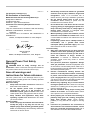
Do not dispose of electric equipment or
battery pack together with household
waste material!
In observance of European Directive
2002/96/EC on waste electric and
electronic equipment, 2006/66/EC on
batteries and accumulators and waste
batteries and accumulators and their
implementation in accordance with
national laws, electric equipment and
battery pack that have reached the end
of their life must be collected separately
and returned to an environmentally
compatible recycling facility.
ENG900-1
Vibration
The vibration total value (tri-axial vector sum) determined
according to EN60745:
Work mode: drilling into metal
Vibration emission (ah,D) : 2.5 m/s2 or less
Uncertainty (K) : 1.5 m/s2
ENG901-1
•
•
ENE034-1
Intended use
The tool is intended for drilling and screw driving in wood,
metal and plastic.
•
ENG905-1
Noise
The typical A-weighted noise level determined according
to EN60745:
•
Model DDF343
Sound pressure level (LpA) : 70 dB (A) or less
Uncertainty (K) : 3 dB (A)
The noise level under working may exceed 80 dB (A)
2
The declared vibration emission value has been
measured in accordance with the standard test
method and may be used for comparing one tool
with another.
The declared vibration emission value may also be
used in a preliminary assessment of exposure.
WARNING:
The vibration emission during actual use of the
power tool can differ from the declared emission
value depending on the ways in which the tool is
used.
Be sure to identify safety measures to protect the
operator that are based on an estimation of
exposure in the actual conditions of use (taking
account of all parts of the operating cycle such as
the times when the tool is switched off and when it
is running idle in addition to the trigger time).