1
Users Manual Area Scan Cameras SVS424/204/285/2020/4021
Page 27
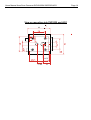
Appendix B - Basic timing for different operation modes
Notes.:
The fundamental signals are PVAL (STROBE), LVAL and FVAL, and in case of triggered modes,
Exsync .
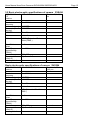
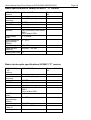
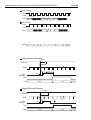
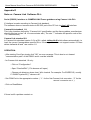
Mode 0 : Free running using serial Interface
A frame is readout automatically and the data are valid indicated by LVAL per line and FVAL by
frame. The data is valid at the rising edge of PVAL ( Strobe) The frame rate is about 13 FPS and
there is no need to trigger the camera in order to get data. The enclosed software allows the user
to set exposure time e.g. from 60 µsec 60 mSec ( camera type dependent). The time set stays
resident after power off if the configuration is saved to EEPROM.
Exposure
time
Data
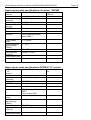
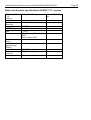
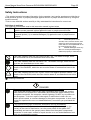
Mode 1: External Trigger and Pulsewidth of EXSYNC
In this mode the camera is waiting for an external trigger which starts integration and read out.
Exposure time can be varied using the length of the EXSYNC pulse ( I. E. between the high
going edge and the low going edge). The time settings in the control software are not activated.
This mode is useful in applications where the light level of the sceen changes during operation
and the framegrabber can provide such a signal. Change of exposure time is possible from one
EXSYNC
frame to the next.
Exposure
time
Data
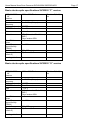
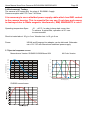
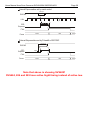
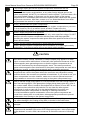
Mode 2 : External trigger and serial Interface
The frane rate is determined by the number of EXSYNC pulses per time unit. With each positive
transition ( going high) the camera will readout a frame. Exposuretime is set in the same way as
in the free running mode but with an exposure range from 60 µSec to 4,3 Sec.
Exposure time can be changed online during operation. No frame is distorted during switching
time. The time set stays resident after power off, if the configuration is saved to EEPROM.
EXSYNC
Exposure
time
Data