1
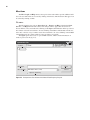
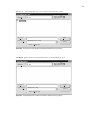
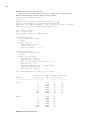
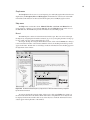
The National Flood Frequency Program, Version 3: A Computer Program for Estimating Magnitude and Frequency of Floods for Ungaged Sites Compiled by K.G. Ries III and M.Y. Crouse Abstract For many years, the U.S. Geological Survey (USGS) has been developing regional regression equations for estimat ing flood magnitude and frequency at ungaged sites. These regression equations are used to transfer flood characteristics from gaged to ungaged sites through the use of watershed and climatic characteristics as explanatory or predictor variables. Generally, these equations have been developed on a Statewide or metropolitan-area basis as part of cooperative study programs with specific State Departments of Transportation. In 1994, the USGS released a computer program titled the National Flood Frequency Program (NFF), which com piled all the USGS available regression equations for estimat ing the magnitude and frequency of floods in the United States and Puerto Rico. NFF was developed in cooperation with the Federal Highway Administration and the Federal Emergency Management Agency. Since the initial release of NFF, the USGS has produced new equations for many areas of the Nation. A new version of NFF has been developed that incor porates these new equations and provides additional function ality and ease of use. NFF version 3 provides regression-equation estimates of flood-peak discharges for unregulated rural and urban watersheds, flood-frequency plots, and plots of typical flood hydrographs for selected recurrence intervals. The Program also provides weighting techniques to improve estimates of flood-peak discharges for gaging stations and ungaged sites. The information provided by NFF should be useful to engi neers and hydrologists for planning and design applications. This report describes the flood-regionalization techniques used in NFF and provides guidance on the applicability and limitations of the techniques. The NFF software and the docu mentation for the regression equations included in NFF are available at http://water.usgs.gov/software/nff.html. INTRODUCTION By W.O. Thomas, Jr., M.E. Jennings, and K.G. Ries III Estimates of the magnitude and frequency of flood-peak discharges and flood hydrographs are used for a variety of pur poses, such as the design of bridges and culverts, flood-control structures, and flood-plain management. These estimates are often needed at ungaged sites where no observed flood data are available for frequency analysis. One method commonly used for estimating the magnitude and frequency of floodpeak discharges and flood hydrographs at ungaged sites is use of regression equations. Regression equations are developed by statistically relating the flood characteristics to the physi cal and climatic characteristics of the watersheds for a group of gaging stations within a region that have virtually natural streamflow conditions. Regression equations enable the trans fer of flood characteristics from gaging stations to ungaged sites simply by determining the watershed and climatic charac teristics needed for the ungaged site. The USGS has been developing regression equations for estimating the magnitude and frequency of floods at ungaged sites since at least the early 1960’s. Support and justification for the applicability of these equations for estimating floodpeak discharges for rural watersheds is given by the U.S. Water Resources Council (1981) and by Newton and Herrin (1982). These reports summarize a test of nine different sta tistical and deterministic procedures for estimating flood-peak discharges for rural watersheds. The results of this test indicate that USGS-developed regression equations are unbiased, reproducible, and easy to apply. By 1993, reports that contained regression equations for estimating flood-peak discharges for rural, unregulated watersheds had been published by the USGS, at least once, for every State and for the Commonwealth of Puerto Rico. The Statewide flood-frequency reports were prepared generally in cooperation with individual State Departments of Transpor tation, and were published either by the USGS or the State Departments of Transportation. In 1993, regression equations were available for estimating urban flood-peak discharges for metropolitan areas in at least 13 States, and a set of national urban equations also was available. The USGS, in cooperation with the Federal Highway Administration and the Federal Emergency Management Agency, compiled all USGS-developed regional regression equations available, as of September 1993, in the National Flood Frequency (NFF) Program (Jennings and others, 1994). NFF was a MS-DOS computer program that provided engi neers and hydrologists a practical tool for computing estimates of flood-peak discharges at selected recurrence intervals used for planning and design applications. NFF also provided the ability to generate flood-frequency plots and plots of typical flood hydrographs corresponding to a given rural and (or) urban peak discharge. Since the original release of the NFF Program, new or updated equations have been developed by the USGS for all or parts of 36 States. Longer periods of record, and improved