1
C : TOOLS FOR THEMATIC ANALYSIS
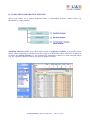
These tools enable us to discover, examine and map “themes” emerging from texts.
As theme is a polysemous word, when using software tools for thematic analysis we have to refer
to operational definitions. More precisely, in these T-LAB tools, “theme” is a label used to indicate
four different entities:
1- a thematic cluster of contexts units characterized by the same patterns of key-words (see the
Thematic Analysis of Elementary Contexts, Thematic Document Classification and DictionaryBased Classification tools);
2- a thematic group of key terms classified as belonging to the same category (see the DictionaryBased Classification tool);
3 – a mixture component of a probabilistic model which represents each context unit (i.e.
elementary context or document) as generated from a fixed number of topics or “themes” (see the
Modeling of Emerging Themes tool).
4- a specific key term used for extracting a set of elementary contexts in which it is associated
with a specific group of words pre-selected by the user (see the Key Contexts of Thematic Words
tool).
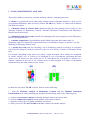
For example, depending on the tool we are using, a single document can be analysed as composed
of various ‘themes’ (see ‘A’ below) or as belonging to a set of documents concerning the same
‘theme’ (see ‘B’ below). In fact, in the case of ‘A’ each theme can correspond to a word or to a
sentence, whereas in the case of ‘B’ a theme can be a label assigned to a cluster of documents
characterized by the same patterns of key-words.
In detail, the ways how T-LAB ‘extracts’ themes are the following:
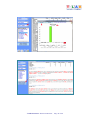
1 - both the Thematic Analysis of Elementary Contexts and the Thematic Document
Classification tools, when performing an unsupervised clustering, work in the following way:
a - perform co-occurrence analysis to identify thematic clusters of context units;
b - perform comparative analysis of the profiles of the various clusters;
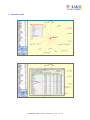
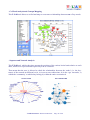
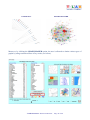
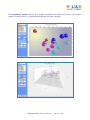
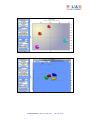
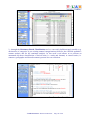
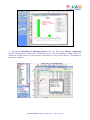
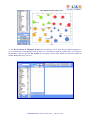
c - generate various types of graphs and tables (see below);
d - allow you to save the new variables (thematic clusters) for further analysis.
T-LAB Plus 2019 - Quick Introduction - Pag. 21 of 29