1
void
void
void
void
void
void
void
void
setjlightVoltage(String strValue);
setiightMode(String strValue);
setreflector(String strValue);
settransFilter(String strValue);
set-y(String strValue);
set-x(String strValue);
set-exposureTime(String strValue);
set_fieldStop(String strValue);
}
It is important to note that even if the client does not need a certain control (for
example if the GUI does not have a component for the transmission filter control) the
following methods still need to be declared in the class that implements this interface,
even if they are left empty. The whole point of having declared this interface is because
when the command SCOPE is sent from the server to the client it will send the state
values of ALL the controls the server can handle. Since the client application calls the
set methods automatically by their names, "set_<controlname>", if any of these
methods fail to appear in the implementation class then an error will occur. The main
purpose of the interface is to keep a record and maintain a protocol of which controls the
server implements, so that the client knows which methods it has to have.
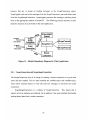
Another important component to note about IScopeControls is the Hashtable called
state.
A Hashtable is basically a table that matches key names to values. This state
object will be inherited in the class that implements this interface, and will aid in
maintaining the state of all the control values. This Hashtable maps the control name to
its corresponding value, and should be updated by the class that implements this
interface.
5.3.3
ScopeGUI
The main function of ScopeGUI is to create and maintain the components of the
Graphical User Interface (GUI).
ScopeGUI creates and initializes all the Swing
components and panels, and it creates event listeners for each graphical component.
These event listeners are discussed in more detail in the next section.
35