1
All options for the anthems must be prepared in advance
(lasting between 1 minute and 1 minute 30 seconds) and
the hoisting of the flags must be rehearsed at least one day
before the awarding ceremony.
B. The Personnel
Note:
Officials, Staff and volunteers may be allowed to line up
around the competition area.
1. Before the Final Match (es):
The following personnel are needed:
–
One experienced Master of Ceremonies with perfect
command of English and the language of the host country;
–An announcer able to speak English and the host country
language;
–Three name board carriers;
–Minimum four hostesses (ideally 6) trained to carry and
present the cups and/or trophies and the cushions or trays
holding the medals;
–Honorary platoon to manoeuvre the flags;
–One professionally trained chief of protocol to guide and
coordinate the various dignitaries in their movements during
the ceremony, as well as an assistant chief of protocol to be
in charge of the medal bearers;
–The Court Manager and at least 8 additional staff assisting
him/her to quickly remove the sport equipment such as the
net poles, padding, net camera, referee chair, etc. and set
up the carpets, podium, backdrop, table, etc.;
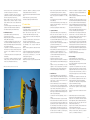
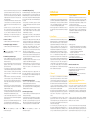
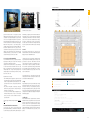
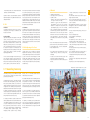
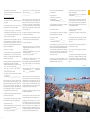
USA's Sean Rosenthal is interviewed in the mixed zone
C. Rehearsal
The relevant personnel must perform a full rehearsal the day
preceding the awarding ceremony. All personnel listed above
should be involved, as well as the FIVB Technical Supervisor,
FIVB TV Coordinator and the director designated by the Host
TV Broadcaster. Reserve personnel for each function must
also be trained as back up staff in case of any last minute
contingencies. Organisers should inform the teams concerned
about their role the day before the finals and arrange rehearsals
with the relevant personnel to ensure that the ceremony is run
according to the previously prepared schedule. Participation at
the awarding ceremony is compulsory and sanctions will be
given by the FIVB to teams arriving late or leaving the host city
without authorization in writing from the FIVB.
D. Awarding Ceremony
The awarding ceremony takes place in the stadium
immediately after the last whistle of the final match.
–PR Director checks that all the necessary materials are ready;
–Court Manager ensures that the necessary personnel are
ready to dismantle the equipment and put the various
elements of the awarding ceremony in place;
–Assistant to the PR Director checks the flags, awards, cups,
trophies, cushions, etc. with the hostesses;
–FIVB Technical Supervisor checks the availability of clean
tank tops/tops for the athletes of the three teams;
–Court Manager checks that the masts (or mobile hangers)
are in the right position and work properly;
–PR Director checks with the FIVB President (or with the
FIVB Technical Supervisor if the President is not attending
the event) the list of the dignitaries invited to present the
awards and verifies their respective tasks. He then ensures
that the announcer receives this list.
The FIVB President or the FIVB Technical Supervisor, in
agreement with the National Federation Delegate and the
Tournament Director, designates the officials or guests
responsible for presenting the awards (BVB-32 form). Priority
must be given to the FIVB President, Governmental authorities,
hosting city representatives, sponsors, etc. The FIVB President
may ask governmental authorities or other personalities to
accompany him to award the prizes.
2. Immediately after the Gold Medal Match:
Immediately after the Gold Medal Match final whistle is
blown and the athletes leave the playing area, the announcer
informs the audience that the awarding ceremony is about to
take place and asks spectators to remain in their seats.
The technical area staff (Court Manager and assistants)
implements the following actions:
–Dismantle and remove poles, net, referee’s chair and
umbrellas in the time-out areas;
–Open a passage, if necessary, by spreading out (without
removing) some advertising panels;
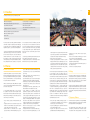
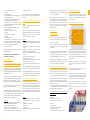
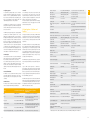
–Position the red carpets and the three podiums as per the
layout plan, facing the VIP tribune as follows: podium No.1
in the middle, podium No.2 to its left, podium No.3 to its
right;
–Position the table on which medals, trophies, and individuals
awards are displayed;
–Set up the 3 poles if not already in place;
–Arrange ropes to define the area reserved for photographers;
–Install and equip the area reserved for orchestra or fanfare,
if any;
69
–Lower the ropes of the masts in order to properly fix the
flags (or lower the mobile hangers to a reachable height).
–The security staff members take their position in the
photographers’ restricted area. The photographers are then
allowed to take their places;
–The photographers take their position;
–An honorary platoon (or members of the organising
committee) makes its entrance and fixes the flags of the first
three countries at the foot of the three masts as follows: (a)
flag of the first placed team in the centre (highest mast), (b)
flag of the second placed team to the right of the winners’
podium, (c) flag of the third placed team to the left of the
winners’ podium;
–The hostesses in uniform make their entrance and take their
previously designated position near the awards table. They
then wait to hand the awards to the dignitary assigned to
present them;
–The name board carriers of the winning teams assemble at
the entrance, out of public view;
–The athletes of the 3 winning teams march in and line up
behind the name board carrier of their country according
to the order of their respective podium positions, in an area
with direct access to the court;
–The dignitaries march in and stop on the red carpet to the
side of the podium.
2
–Security staff responsible for ensuring that photographers
and authorized hand held TV cameramen stays within their
restricted area;
–One person for each team (3 in total) responsible for
directing the 3 winning teams to the holding and for
providing them with the new tops to be worn during the
ceremony;
–The mascot;
–The dancers to entertain the spectators while the court
manager and his assistant are setting up all materials.
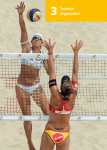
TECHNICAL ORGANISATION
–The official backdrop with the FIVB Beach Volleyball Title,
logo and Tournament Title and its supporting structure;
–The form designating the dignitaries;
–Possibly one orchestra (or fanfare/music) plus appropriate
musical recordings;
–Walkie-talkie with earphone for the key staff members
such as the Master of Ceremonies, Assistant Master of
Ceremonies, Technical Supervisor and the Court Manager to
facilitate coordination of the awarding ceremony schedule.
The athletes must wear clean tank tops/tops and no
accessories or uniform items other than those authorized
for the competition must be worn, with the exception of the
athlete’s own country flag.
3. Start of the Official Ceremony:
The Master of Ceremonies checks that all personnel, athletes,
dignitaries, etc. and the materials are all in place.
If everything is ready he/she authorizes the start of the
ceremony. Throughout the whole presentation, the chief of
protocol remains on the red carpet with the other VIPs so that
he can verify that the right people are performing their duties.
The assistant chief of protocol standing near the awards
table is responsible for checking that the hostesses take the
right cups/trophies, medals and awards, and proceed to their
places in time without delaying the ceremony.
End of Final Match Announcement:
“Ladies and Gentlemen,
Please remain in your seats; we will shortly begin the Awards
and Closing Ceremony for the FIVB Beach Volleyball World
Tour Grand Slam/ Swatch Beach Volleyball Major Series part
of FIVB World Tour + Year + Tournament Title”.
“Ladies and Gentlemen,
Please remain in your seats; we will shortly begin the Awards
and Closing Ceremony for the FIVB Beach Volleyball World
Tour Open + Year + Tournament Title”.
–Teams return to locker rooms for changing uniforms.
–On court staff to set up the Closing Ceremony court layout.
–Entrance of the entertainment group and photographers
70