1
Whole Class
Small Groups
Whole Class
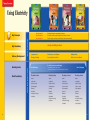
•Introduce Theme and Books
•Begin Reading: Pages 6–16
•Check Understanding
Introduce the Theme
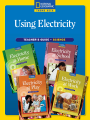
Introduce the Books
Activate Prior Knowledge
Preview the Books
Explain that everyone will be reading about a different
place where electricity is used. Some students will be
reading about the electricity at home, while others will
be reading about electricity at play, at school, or at
work. Ask:
Have students flip through their books, paying
attention to titles, headings, pictures, captions, and
diagrams. Invite students to identify photographs
or other parts of the book that seem interesting or
familiar to them.
What are some ways you use electricity every day?
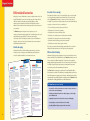
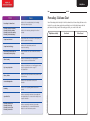
Distribute the Prereading Master found in this Teacher’s
Guide, page 59. You may want to create a transparency
to model filling in the Master with students.
Explain that the first article starting on page 6 and
ending on page 16 is an informational article. It gives
the kind of information you might find in a report. The
headings and subheadings give clues about what the
text will describe and explain. Ask students to predict
what kind of information they might find out when
reading this article.
Write electricity on the board. Explain that we use
electricity in many ways every day. Ask students to
suggest some ways they use electricity.
Then have students turn to page 21. Have them
examine pages 21 to 26. Tell students that this is
a how-to book. Ask:
How does electricity help you do work?
How would you do these things differently without
electricity?
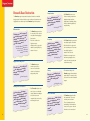
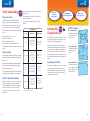
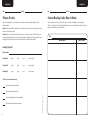
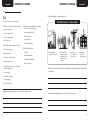
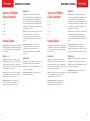
With the class, make a 3-column chart about
electricity. In column 1, students can list things they
use that run on electricity. In column 2, they can list
how they use each thing. In column 3, students can
tell where this thing is used (in the home, at school,
etc.). Students can add to each column as they learn
new information about the topics.
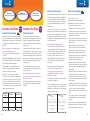
Thing that uses
electricity
34
How it works
Where it is used
How is the information in this article organized?
Does this kind of article remind you of other books or
materials you have read?
Point out that knowing how an article is organized
helps students better understand the information
in an article.
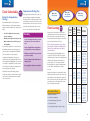
Discuss the Introduction
Teach Key Vocabulary
Have students turn to pages 4–5 in their books. Read
aloud the title and introductory text, including the Key
Concepts. Ask students to review their Prereading
Masters and ask questions about electricity and the
things they mentioned that might be answered by
reading this book.
Introduce the Key Vocabulary words:
Then ask for a show of hands for each book. Point out
that although not all students will be reading the same
book, they all will be reading information that explains
the Key Concepts. Explain that the Key Concepts are
the big ideas or most important ideas. Read each Key
Concept aloud and ask:
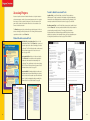
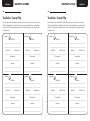
• Write circuit on the board. Show how the word
should be divided to pronounce it. Say each word
part and blend the parts to say the word. Have students repeat the word chorally.
What do you think this Key Concept means?
Then point out how the Key Concepts are used to
organize the first article. Read the first Key Concept
and have students turn to page 6 and find the Key
Concept on that page. Follow this routine for Key
Concept 2 on page 10 and Key Concept 3 on
page 12. Explain that the information they read
after each Key Concept explains the big idea of
the concept.
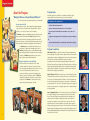
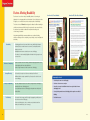
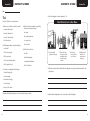
Discuss with students the pictures and captions
across the bottom of pages 4–5 and say:
The text on page 4 says people use electricity
everywhere. What do you think are some ways
electricity is used at home?
Accept students’ ideas, and review the other pictures
and captions in a similar way.
Then direct students’ attention to the large photograph
on page 5. Have students turn to a neighbor who has
a different book and have them share the photograph
and caption shown on page 5.
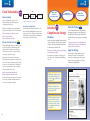
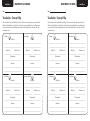
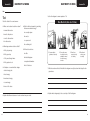
1. circuit
2. electricity
Definition
Definition
_________________________
_________________________
_________________________
_________________________
What it is
What it is not
What it is
What it is not
___________
___________
___________
___________
Descriptions
Descriptions
_________________________
_________________________
Sentences
Sentences
circuit, electricity, electrons
Explain that these words are important for
understanding the Key Concepts, or main ideas,
in the book. To introduce each word:
• Have students skim the first article to find the word
circuit in green print on page 10. Write circuit at the
top of the board.
• Next, ask students to look up the word in the
glossary on page 31 of their books and read the
definition. Write the definition beneath the word.
• Have students hunt through their books to find
words that are synonyms for the vocabulary word.
Write these words on the left, beneath the
definition. An example might be loop.
• Students can then look for examples of what the
word is not. Write these words on the right beneath
the definition. Some nonexample words might be
bulb, and light.
• Next, have students look for words that describe the
word circuit and write these words in the center
under the two lists of what the word is and is not.
Some describing words might be flowing, powering,
closed, and open.
• Ask students to look for pictures in their books that
help to show what the word means. Invite students
to point to or explain which pictures help them
understand the meaning of the word or relate to the
word.
• Then, students can think of a sentence using the
word circuit. Write this sentence at the bottom of
the board.
Continue in this way for the words electricity and electrons. Students will use this concept map for specific
book vocabulary words later in this Lesson.
35