1
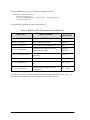
A fourth library, MODEM.LIB, contains functions for controlling an external modem through a
full RS232 link. MODEM.LIB should not be required for most ISP connections, since most ISPs
these days auto-detect the use of PPP and do not require any special logon screen navigation.
Basic dial-up to an ISP is handled directly by ifconfig() settings, which do not require any
special modem control (providing that your modem has a Hayes-compatible interface).
MODEM.LIB is not directly related to PPP. It allows ASCII strings to be sent to and received from
the modem. Typically, these strings are AT commands and modem responses.
If you have special requirements for establishing communications with an ISP that cannot be handled by the default PPP library methods, you will need to explicitly include MODEM.LIB and
write a program to establish the communications link. The program will typically need to command the modem to dial out; wait for a valid connection; send a user ID and password to the ISP
and validate the response. After this has completed successfully, PPP can be started using the
ifup() function. For a complete description of ifup() and other Dynamic C TCP/IP functions, please see the Dynamic C TCP/IP User’s Manual..
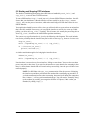
NOTE: MODEM.LIB is currently limited to controlling a single modem. The modem
serial port and control lines are defined using macro constants, which should match
with the definitions of the PPP interface.
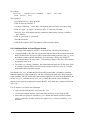
The sample program Samples\PPP\modem_test.c shows the general idea for using
MODEM.LIB.
2.0 Operation Details for PPP over Serial
The first step is to configure whatever transport medium will be used for the PPP connection. For
directly connecting a serial line to the peer, the two serial data lines TX and RX may be adequate.
The most common situation, however, will be some sort of modem.
2.1 The Modem Interface
The interface between a modem and a controller is either a true RS232 interface or a variation on
RS232 that uses TTL voltage levels for all of the signals. The latter are used by board-mounted
modem modules. If an external modem is used, an RS232 transceiver chip is needed to convert
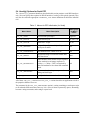
RS232 voltages to logic signals and vice versa. A full RS232 connection has 3 outputs and 5
inputs from the controller’s point of view. In RS232 terminology, the controller is referred to as
the DTE (Data Terminal Equipment). Modems and other peripherals are referred to as DCE’s
(Data Communications Equipment).
The specifics of a dial-up PPP connection are dependent on the modem hardware and the ISP.
PPP Driver Module
020-0062 Rev. A
2