1
3
d.
e.
II.
User Testing
During this phase, we initialized our first series of user-testing with a number
of different users ranging from Information Systems professors to Information
Systems undergraduates. This portion of our phase is extremely important
because we will utilize the users' feedback to better Project Athena. Because
Project Athena is not completely finished, there were portions that were not
presentable for our users. However, we wanted to begin testing as soon as
possible in order to make the necessary changes while completing the system.
With these preliminary comments, we will be able to reference them, improve
what is needed, and hopefully test the same users again to see if they are
satisfied with the changes. We would like as much feedback and comments as
possible, therefore we felt it was necessary to begin user-testing regardless of
Project Athena's completion.
Lessons Learned
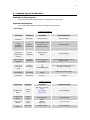
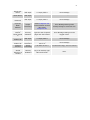
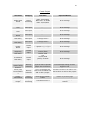
The attached document (section 7) is a compilation of the lessons we have
learned about people, process, and technology. Specific examples from the
semester are given. By doing so, we can clearly identify the origin of the
lesson and how it has helped the team grow during the semester. The record
of lessons learned show that much of our mistakes were found during the
beginning of the semester due. However, we were able to learn from our
mistakes and increase our productivity and strengthen our relationships.
Project Management
Task Analysis – For the final phase, we are expected to work for 252 hours (3
weeks, 7 members, 12 hours/week) in average. The actual work hours
according to the implementation plan will be 197 hours, which does not
account for the time lost during carnival – 42 hours (half efficiency). During
phase 5, we will spend 31% of the time on documentation, 23% on quality
assurance, 30% on implementation, 6% on the 2nd round of user testing, and
10% on the final presentation preparation. We have allocated a lot more time
on technical quality assurance (30%) since we need to further refine our site
before the final evaluation. In addition, hours for the final presentation and
user testing have been included into our tasks.
a. Quality Assurance –
i.
Cost of Quality – Cost of Quality required about 24.3% of the 239
total hours placed into this phase. In order to assure quality in our
tasks, we utilized different methodologies for defect prevention,
detection, and correction. To implement defect prevention, a number
of tasks were divided amongst team members. For detection, we
integrated individual parts and ran through the use cases to see if
appropriate results displayed. orrections required the team to submit
their work to the TQA who had to review and verify the correctness
of the work. Flaws that arose from combining different parts were
fixed by code review sessions and conferring with Professor
Heimann. Constantly checking our work with Professor Heimann, the
original coder and the TQA, we were able to correct our work until
we reached near production status on some use cases.
ii.
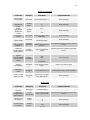
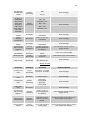
Time Accounting - In terms of time accounting, our time and effort
for this phase was on par with our estimates. As a team, we put in
close to 79 hours per week or approximately 239 hours for the entire
phase. Much of our work this time around focused primarily finishing
up the remaining use cases, refining previous “ungolded” use cases,
and most importantly, integration and design refinement. According
to weekly meeting and implementation status reports, 88% of our
documentation tasks met both personal and course deadlines.
Though our punctuality with documentation has decreased, we were
able to significantly raise our implementation percentage from
previous phases. In our subsequent phases, we will work to