1
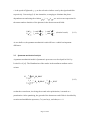
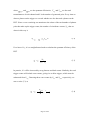
collimated source radiation will simplify the analysis. How accurately this can be
done will depend on the profile we can get for the collimated source.
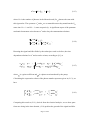
The second aspect should be fulfilled automatically for a particular pair of
wavelengths in the collinear case. The question will be how accurately we can know
what those wavelengths are. This will involve how the crystal is cut, how it is rotated
and what filters are used. Also, predicting these wavelengths can be difficult due to
the discrepancy in sources for the Sellmeier indices for BBO, discussed in section 4.3.
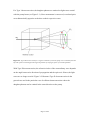
Again, the collinear arrangement with the collimated source should simplify the
analysis for the angular overlap. The uncertainties here will arise in how well we can
align the optics to achieve this.
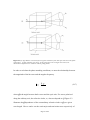
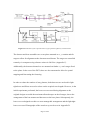
Having considered how well the source and pump overlap spatially, angularly and
spectrally, we can consider where the mean point of downconversion will be,
necessary for establishing the transmittance of the crystal. For our arrangement, this
should again be the centre of the crystal. The problem that emerges is then
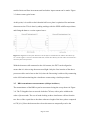
considering reflections at the boundaries. Rotating the crystal will change the spectral
transmittance of any AR coating on the exit face. Also, we may wish to use the same
crystal at different frequencies. This means that approximations used in section 3.6.2
may no longer be valid and further analysis may be required.
Page 55 of 81