1
Using Asynchronous System Traps
8.7 Delivering ASTs
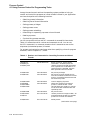
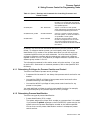
8.7.3.1 Outer Mode (User and Supervisor) Non-Serial Delivery of ASTs
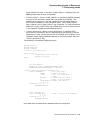
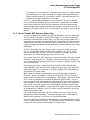
Before kernel threads, AST routine code of a given mode has always been able to
assume the following:
•
It would be processed serially. It would not be interrupted or executed
concurrently with any other AST of the same mode.
•
It would be processed without same-mode, non-AST level code executing
concurrently.
Further, before kernel threads, user mode code could safely access data that it
knows is only used by other user mode, non-AST level routines without needing
any synchronization mechanisms. The underlying assumption is that only one
thread of user mode execution exists. If the current code stream is accessing the
data, then by implication no other code stream can be accessing it.
After kernel threads, this assumed behavior of AST routines and user mode
code is no longer valid. Multiple user-mode, non-AST level code streams can be
executing at the same time. The use of any data that can be accessed by multiple
user-mode code streams must be modified to become synchronized using the loadlocked (LDx_L) and store-conditional (STx_C) instructions, or by using some other
synchronization mechanism.
Kernel threads assumes that multiple threads of execution can be active at one
time and includes outer mode ASTs. Within any given kernel thread, outer
mode ASTs will still be delivered serially. Also, the kernel thread model allows
any combination of multiple outer mode threads, or multiple outer mode ASTs.
However, outer-mode AST routines, as well as non-AST outer-mode code, has to
be aware that any data structure that can be accessed concurrently by outermode code, or by any other outer-mode AST must be protected by some form of
synchronization.
Before kernel threads, same-mode ASTs executed in the order that they were
queued. After kernel threads and within a single kernel thread, that still is true.
However, it is not true process-wide. If two ACBs are queued to two different
KTBs, whichever is scheduled first, executes first. There is no attempt to schedule
kernel threads in such a way to correctly order ASTs that have been queued to
them. The ASTs execute in any order and can, in fact, execute concurrently.
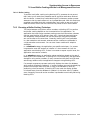
8.7.3.2 Inner Mode (Executive and Kernel) AST Delivery
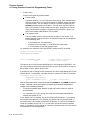
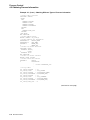
Before kernel threads, OpenVMS implemented AST preemptions in inner modes
as follows:
•
An executive mode AST can preempt non-AST executive mode processing.
•
A kernel mode AST can preempt non-AST kernel mode processing, or any
executive mode processing.
•
A special kernel mode AST can preempt a normal kernel mode AST, non-AST
kernel mode, or any executive mode.
•
No ASTs can be delivered when interrupt priority level (IPL) is raised to 2 or
above. Special kernel mode ASTs execute entirely at IPL 2 or above, which
is what prevents other kernel mode ASTs from executing while the special
kernel mode AST is active.
8–12 Using Asynchronous System Traps