1
2.1
Revision tracking
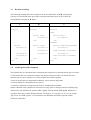
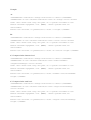
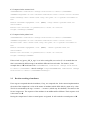
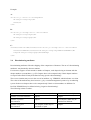
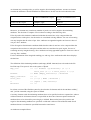
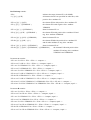
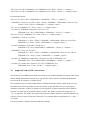
The following example shows the comparison of the two documents A and B, resulting in C.
(The text is stylized with white space and record ends around the tags in order to show the
correspondences between A, B and C.)
A:
<A>texta
B:
<A>texta
C:
<A>texta
<add>
<B>list small
<B>list small
<C>elem2</C>
</B>
<C>elem2</C>
</B>
<endadd>
<B>list
<B>list large
<C>elem1</C>
<C>elem1</C>
<C>elem2</C>
2.2
<add><C>elem2</C><endadd>
<C>elem3</C>
<del><C>elem4</C><enddel>
<C>elem4</C>
</B>
</A>
</A>
<C>elem1</C>
<C>elem3</C>
<C>elem3</C>
</B>
<B>list <add>large<endadd>
</B>
</A>
Atomic parts of the document
The smallest unit of a document that is used during the comparison is called the atomic part. In section
2.1 the atomic unit was a character; but there may be good reasons to take as an atomic unit not a
character, but a word, a sentence or even the complete text within a #pcdata.
4 types of atomic units are implemented: character, word, sentence and pcdata.
A word is defined as a string between two spaces.
A sentence is defined as a string between two dots, including the second dot.
Pcdata is defined as the complete text in between two tags (start or end tags), and not containing tags
within itself. This definition of "pcdata" differs slightly from the formal XML/SGML definition of
"#pcdata" which may contain floating elements. For instance, in '<a>pqr<b>st</b></a>' the strings
'pqr' and 'st' are called "pcdata", even if element a was defined in the DTD as #pcdata with an
inclusion of element b.