1
13
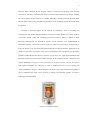
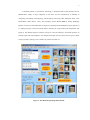
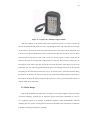
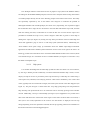
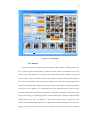
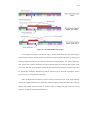
design-environment refers to the caregiver script-design-environment (also known as the script
editor), and MAPS-prompter refers to the mobile prompting environment used by person with
cognitive disabilities end user.
The full scope of developing the research platform, beyond implementing and evaluating the
MAPS-prompter and MAPS-design-environment, includes evaluating the system in use. This last part
of the research activities involves evaluation of the suite of applications in controlled, laboratory
experiments and in the real world. The evaluation of the system in the real world, with real users and
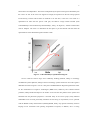
meaningful tasks, is driven by the dichotomy between rigor and relevance in research [Schön, 1983].
On the one hand, rigor reflects a need for experiment reproducibility, but gains this by rigidly
controlling all aspects of system testing, which means that the chaos of the real world is excluded. The
results may be scientifically valid but not relevant in any meaningful way to the real use of the system.
On the other hand, relevance, which is the argument of ethnography and case studies, has meaning
because the use is studied in context. However, the results might not be generalizable, and numbers
and reproducibly are limited. This study starts with the relevant side of the spectrum and thus provides
the ground that may facilitate further rigorous research.
1.6. Reading Guide
In this dissertation, chapter one defines the problem space, offering an introduction to assistive
technology, persons with cognitive disabilities, and prompting. It broadly describes the proposed
solution and the research environment for the development of MAPS. It then details the scope of the
research questions raised. Finally, this chapter lays out the approaches used to answer the research
questions.
Chapter two starts by discussing the cultural matrix of the dilemma in which developing assistive
technology is embedded. Following this are further definitions of assistive technology and the key
stakeholders—persons with cognitive disabilities and their caregivers. Finally, it discusses the
dynamics and details of high-functioning AT, as well as the particular dilemma of high levels of
abandonment.