1
I. Background
By far the most popular OOB protocol today is the Intelligent Platform Management
Interface, aka IPMI, which communicates to a server via the service processor or
baseboard management controller (BMC.) 200 computer manufacturers are currently
on Intel’s Adopter’s List2 and it’s hard to buy a server that doesn’t have native support.
What most call IPMI is actually composed of four main specifications: the “Intelligent
Platform Management Interface (IPMI), Intelligent Platform Management Bus (IPMB),
IPMI Platform Management FRU Information Storage Definition, Intelligent Chassis
Management Bus (ICMB)”3. It was initially developed by Intel, Dell, HP, and other large
corporations; version 1.0 specifications published in 1998. Version 1.5, which introduced
networking and is still in wide use, came out in 2001, and version 2.0 was rolled out in
2004 (the last revisions being published June 20094.)
Despite version 1.5 being over a decade old an Internet-wide IPMI survey (see section 5)
revealed that of the more than 300,000 servers discovered, a whopping 63.1% didn’t
speak version 2.0. Version 2 does have backwards compatibility, but since virtually
every server sold today supports version 2 it’s a curious figure.
Like any good spy IPMI has a variety of aliases. Server and firmware vendors not only
add a wide variety of features but rebrand the label: Dell calls theirs iDRAC, Hewlett
Packard iLO, IBM IMM, etc., but in the end most of the core functionality is powered by
IPMI. Intel launched a similar effort for personal computers called Active Management
Technology (AMT) that shares many features with IPMI but for a variety of reasons I
don’t think it’s as dangerous5.
The most common use of IPMI is to monitor server physical health and status via its
sensors; temperature, memory errors, disk health, fan speeds, and the like may be
captured and associated alarms triggered when something is amiss. Vendors allow you
to reboot a server, change BIOS settings, install an operating system, or perform other
low-level management tasks.
From the start the BMC was designed to be resilient, and is able to communicate with its
server or with other computers even when the main network was down, the server power
is off, the operating system or disks crash, or when other catastrophic failures happen
(which is pretty cool if you think of it.)
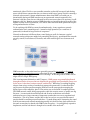
Figure 1, courtesy of the Intel Development Forum, might help illustrate IPMI’s place in
the management stack. Computer management systems have long tried to tackle the
higher-level concepts of applications, operating systems, and the like, and something was
needed to deal with the low-level hardware issues. Supercomputers, virtual controllers,
clustered computers, etc. also use IPMI to spin up and down nodes on demand.
Figure 1 3