1
SRH Facilitators’ Training Manual: MODULE 3 Young Adolescents’ Sexual and Reproductive Health
SRH Facilitators’ Training Manual: MODULE 3 Young Adolescents’ Sexual and Reproductive Health
Table of Contents
Introduction
Introduction1
This Module 3 of the SRH Facilitators’ Training
Manual focuses on young adolescents’ sexual
and reproductive health. The term “young
adolescents” as used herein refers to the
age group of young people between 10 and
14 years of age. Young adolescents are in
an age during which they experience many
physiological, social and emotional changes.
Most of these changes are known as puberty.
During that phase young adolescents begin
to develop the ability to think more abstractly.
They become less dependent on parents and
more dependent on friends. At this stage,
young people begin to experience sexual
arousal, although boys are more focused on
genitals and girls more focused on romance.
While pre-adolescents begin to develop a set
of best friends and start to feel peer pressures
to conform, early adolescence is the peak time
when peer pressure rules, and girls and boys
spend more time with friends.
Chapter 1: Reproductive organs, puberty and body changes
3
1.0 General introduction and/or icebreaker3
1.1 Female and male reproductive organs3
1.2 Puberty and body changes10
1.3 Menstruation and pregnancy19
1.4 Sexuality and Reproductive Health27
Chapter 2: Unhealthy relationships, harmful practices and sexual violence 37
2.1 Healthy and unhealthy relationships37
2.2 Harmful practises and sexual violence40
Chapter 3: Sexually Transmitted Infections (STIs) including HIV & AIDS 44
Annex - Tools and master copies for Module 3
47
For boys, overall maturation and initiation
of puberty is about one to two years later
than for girls, and therefore they are always
catching up to girls biologically, cognitively
and emotionally. Regardless, both groups
may be unprepared for the changes they
experience during puberty. While girls have the
“experience” of getting their first periods and
discussing this event with others, boys do not
necessarily have social spaces to share similar
experiences.
year old boys may be asked to help support
their families economically, may experience
peer pressure to have first sexual experiences
or may start imitating men who they know or
admire and take more risks.
Against the background of the amount of
challenges that these young people face,
early adolescence presents an opportune
time to address topics related to sexual
and reproductive health, share important
knowledge and thus to positively influence
young adolescents’ future choices and
decisions. This Module contains basic but
fundamental information on reproductive
health, sexuality and healthy lifestyles.
It is important that the facilitator prepares
well and is aware of the feelings and mind sets
of this young target group that this Module
addresses. Every topic and issue of this Module
are highly sensitive and can easily make
young adolescents feeling shy, embarrassed
or ashamed. It is therefore indispensable that
the facilitator employs very sensitive and
youth-friendly language and method especially
during the facilitation of exercises. Participants
may not feel comfortable in speaking openly
about SRH or experiences or interacting in
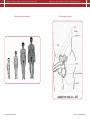
A ten-year old looks and acts like a child.
However, by the time s/he turns 13 or 14 a huge
shift has taken place. In some societies, 14year old girls are considered to be old enough
for marriage, sex and childbearing while 14-
© Deutsche Stiftung Weltbevoelkerung
© Deutsche Stiftung Weltbevoelkerung
1