1
1.3
Air resistance
Air resistance is a complicated subject and for most real problems it cannot be dealt
with analytically. Typically one of a variety of approximations is applied depending upon
which fluid regime the problem falls under [Marion and Thorton, 1995]. For this lab we
will use :
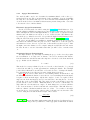
f (t) = −bv(t)2
(10)
where here “−” means that the drag force is in the opposite direction from the direction
that the rocket moves and b is the drag constant. Other common forms for the drag force
depend on the speed to the first power. The constant b depends on the fluid the rocket
is moving through and the shape of the rocket:
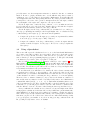
1
ρcd A
(11)
2
where ρ is the density of air, cd is the drag coefficient, and A is the surface area of the
cross-section of the rocket. We will measure the cross-sectional area, and the density of
air can be determined from the ideal gas law and the weather conditions at the time of
the flight of the rocket. The drag coefficient depends on the shape of the rocket and the
smoothness of its surface. The drag coefficient is one of the major unknown quantities
that we will determine in this lab. Values for this quantity should end up being somewhere
between 0.2 and 2.
Since the form for the drag force law changes as the speed of an object changes, the
drag coefficient is not constant over wide speed ranges. In this lab we will first use one
type of rocket engine to determine the drag coefficient. With another type of rocket
engine we will then use the drag coefficient as a known value, and predict the maximum
height of the rocket.
b=
1.4
Combined Equation
Finally, we get to an equation including time-varying thrust, time-varying mass, and air
resistance
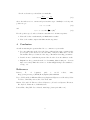
T (t)
bv(t)2
a(t) =
−g−
(12)
m(t)
m(t)
This is the equation that we will solve to find the drag coefficient for the rocket.
2
Experimental Procedure
2.1
Building your Rocket
Follow the instructions included with the rockets for putting your rocket together. Sand
and paint your rockets in order to have a smooth surface that minimizes drag.
1. Does painting your rocket cause have any positive or negative effects on the range
of the rocket? If so, try to estimate these effects.
2.2
Finding Thrust Function from Manufacturer’s Thrust Curves
In order to use the manufacturer’s thrust curves in data analysis, the curves must be
converted into a numerical form. To do this we will convert the continuous curve into
3