1
7 Conclusion
According to Cantoria (2010), one of the weaknesses of thin-client solutions are that
thin-clients work poorly when the latency of the network is high. This thesis does,
however, show a network with a fairly high latency during the performance tests
without any lack of functionality. The results indicate that both of the solutions would
be able to handle double that amount of traffic and simulated users without any
problems. The comparison then comes down to the functionality and cost.
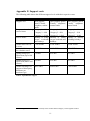
The functionality of the LTSP-solution are quite limited. The options they have are
limited to Linux-distributions without the availability of Windows. The functionality
of the Openthinclient-solution however are quite flexible. They support Linux and
Windows and they have the ability to integrate their system with an existing directory
service. Both of the solutions have available hardware for sale with different
specification depending on the needs of the company.
Giving a final answer to which product is the best is a challenging task since they both
have strong and weak sides. Depending on what the customer is after when looking to
invest into an open-source alternative of thin-client solutions, the result will be
different. Openthinclient is strong when it comes to functionality due to the possibility
to integrate the system with an existing infrastructure. LTSP is a cheaper solution
regardless of the cost-type and both Openthinclient and LTSP are strong when it
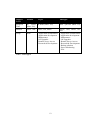
comes to performance. Openthinclient has an available 24-hour support option while
LTSP does not. LTSP has On-Site support while Openthinclient only has remote
support.
7.1 Discussion
The result from this thesis shows that both LTSP and Openthinclient are strong
candidates when choosing a thin-client solution, but are the tests valid?
The results show that the solutions work when constructed in an isolated environment
but when putting the solutions in an environment with existing traffic and normal
users, the results may vary greatly. It does not necessarily mean that the solutions
work in a production-environment even if they perform well in a laboratory setting.
Moreover, the traffic used during the experiments does not model the behavior of real
users, since packgen does not provide such functionality. The users modeled present
thus, a static behavior. To improve these results to a more realistic environment, it
would be preferable to conduct these tests in a production-environment of a company,
with normal users using both solutions. This does, however, mean that the results
might become very company-specific. While the results might not be valid in a
production-environment, it does show that both of these solutions work adequately in
a laboratory setting.
The results of this thesis can, however, be used as a methodology for comparing thinclient solutions in general, since it provides a detailed description on how to construct
test scenarios, how to set the different environments and how to compare thin-client
solutions.
7.2 Future work
Since the majority of the tests in this thesis are based on network traffic, it would be
preferable if another test could be conducted where the memory-usage is put to test.
This can be conducted by opening many instances of the web-browser Firefox from
30