1
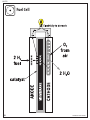
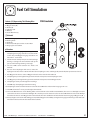
Fuel Cell Simulation Students (15) Representing The Following Roles PEM Simulation 4 Hydrogen atoms (H) 2 Oxygen atoms (O) 2 Anodes (A) 2 Cathodes (CA) 2 PEMs (P) 3 Circuit Members (C) Materials 4 Pieces of fringe (each six feet long) 4 Flashing bulbs 1 Flashlight 1 Piece of colored tape to make circuit on floor 1 Hang tag for each student Procedure 1. All students wear hang tags representing their roles. The Hydrogen hang tags have H on one side and H+ on the other. The Oxygen hang tags have O on one side and O– – on the other. 2. The two Anodes hold up two pieces of six-foot fringe forming a rectangle. The two Cathodes hold up two pieces of six-foot fringe forming a rectangle. 3. The two PEMs stand between the Anode and Cathode. 4. Two sets of two Hydrogens link arms to create two Hydrogen molecules on the outside of the Anode. Each Hydrogen carries a flashing bulb (turned off ) that represents its electron. 5. Two Oxygens link arms to create an Oxygen molecule on the outside of the Cathode. 6. The Hydrogens pass through the fringe into the Anode and separate into two Hydrogen atoms. 7. The Oxygens pass through the fringe into the Cathode and separate into two Oxygen atoms. 8. The Hydrogen atoms pass through the inner fringe. 9. The PEMs stop the Hydrogen atoms from moving. 10. The Hydrogen atoms hand their electrons to the first Circuit Member and turn their hang tags to H+ ions. 11. The PEMs allow the H+ ions to pass through to the Cathode. 12. The Circuit Member turns on the flashing bulbs and hands them to the middle Circuit Member, who turns on a flashlight as he/she receives the electrons and turns the flashlight off as he/she passes the electrons to the last Circuit Member. The last Circuit Member hands two electrons to each Oxygen atom in the Cathode, who turns the flashers off and switches his/her hang tag to Oxygen ion (O– –). 13. Two Hydrogen ions link arms with an Oxygen ion (with the Oxygen in the middle), turning their hang tags and forming a water molecule. The water molecules then exit the outside of the Cathode. ©2014 The NEED Project P.O. Box 10101, Manassas, VA 20108 1.800.875.5029 www.NEED.org 21