1
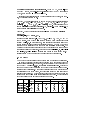
The main overhead is due to the rigidity checks and our implementation in
this respect is rather naive and could be improved. Even in our experimental
implementation this overhead only reaches a maximum factor of about three for
the simplest programs, e.g. Append. The power of our approach, however, lies in
its scalability and it is here where we believe the most impressive performance
gains are to be made. Preliminary tests indicate that the most benet is obtained
from larger programs where only one rigidity test is performed at the beginning
of the program and the rest of the computation is bounded by the depth bounds.
Then our programs can outperform the original ones with the delay declarations,
particularly as the amount of backtracking or coroutining increases.
5 Conclusion
The aim of control generation is to automatically derive a computation rule for
a program that is ecient but does not compromise program correctness. In our
approach to this problem we have transformed a program into a semantically
equivalent one, introduced delay declarations and dened a exible computation rule which ensures that all queries for the transformed program terminate.
Furthermore, we have shown that the answers computed by the transformed program are complete with respect to the declarative semantics. This is signicant.
Beyond the theoretical aspects of the work, we have demonstrated its practicality. In particular, we have shown how transformed programs can be easily
implemented in a standard logic programming language and how such a program
can be optimised to reduce the number of costly rigidity checks needed to ensure termination, dramatically improving its performance. Furthermore, we have
seen how the termination problems caused by speculative output bindings can
be eliminated without the use of a local computation rule or other costly overhead. The coroutining behaviour which is then possible contributes signicantly
to the eciency of the generated code.
In terms of correctness, we have only considered termination and completeness in this work, though other correctness issues also need investigating. We
believe the connection between acyclic modes and rigid terms may provide a
solution in our approach to the occur check problem, since the check is never
needed for acyclic moded goals. Also, the example of Section 2.2 illustrates how
the problem of deadlock freedom may be handled.
The eciency issues also require further investigation. We have separated to
some extent the issues of termination and performance and it is not now clear
what role extra delay declarations might play in improving the performance of
the transformed programs, or even whether other techniques such as multiple
specialisation would be more appropriate.
Acknowledgements
The authors would like to thank Elena Marchiori for providing useful literature
and clarifying their understanding of delay recurrency.