1
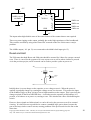
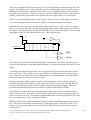
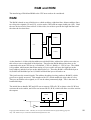
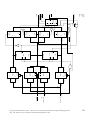
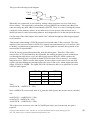
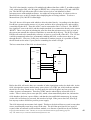
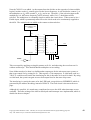
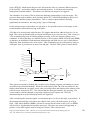
However, since the microprocessor system is being designed from scratch, an EPROM emulator
can be built on breadboard, to which the address, data and control buses can connect it to the rest
of the system.
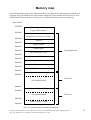
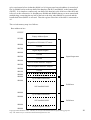
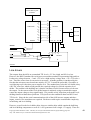
The ROM system therefore requires a size of static RAM to be chosen. Because of the price
difference, 8K devices were again chosen to give 16K of ROM. Since they are mostly pin
compatible, they can be replaced with 32K devices if required.
Modem connection
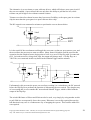
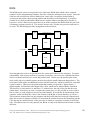
Modems invariably communicate with a microprocessor system using a serial link, as this is the
way the information will be sent through the telephone system. The parallel-based
microprocessor system needs some form of converting parallel data to a serial signal and back
again. This could be done with discrete logic, but the asynchronous nature of the RS232 serial
communications used presents problems. It is much easier to use a dedicated LSI IC to perform
the conversion, and they often have extra features such as error detection as well. There are a
large number of these devices available, many of which are designed for particular
microprocessor architectures. Those that are not generally require great care to ensure read and
write cycles are compatible with the 68000. The 68000 family has its own array of serial
controllers, such as the 68562 dual universal serial communications controller, or the 68681 dual
universal asynchronous receiver/transmitter. While these are designed to interface with the
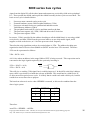
68000‘s bus, they are expensive and complex. An alternative is to look to the 6800 family,
which were the 8 bit predecessors of the 68000. The 68000 can drive 6800 series peripherals, by
modifying its bus cycle and effectively accessing the bus at 1 MHz instead of 8 MHz. This gives
a performance decrease, but when the maximum data rate modems can handle is 28800 bits per
second, this should not be a problem. The 6850 ACIA (asynchronous communications interface
adapter) would be seem to fit this application, and they are cheap and widely available.
Real time clock and timing
The system needs an accurate way of telling the time, so that commands to activate appliances at
a particular time can be accepted. It would be possible to derive such a signal from the
microprocessor clock, but a hardware system consisting of dividers would not be flexible
enough, and a software based system could not keep the time to a reasonable standard of
accuracy. However, dedicated ICs are available for this purpose, mainly to keep the time and
date in desktop PCs. Of the field available, a look through a supplier’s catalogue shows that
most are quite expensive. One that is not is the 146818, which is a CMOS part and also happens
to be a member of the Motorola 6800 family, and therefore this was chosen. Once I had received
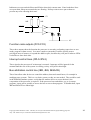
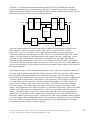
the data sheet, I found out that this uses a multiplexed address and data bus. With this device,
the address is placed on the bus and then address strobe (AS) taken high. AS is then negated,
and then the data read or written in conjunction with data strobe (DS) and read-write (R-/W).
While the 68000 has pins with these labels, they do not perform the same function as those on
the 6818, and it cannot multiplex its bus. The 6818 therefore cannot be connected directly.
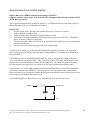
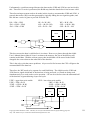
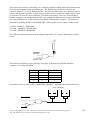
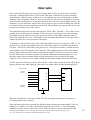
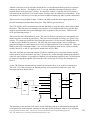
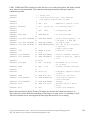
The data sheet gives two possible alternatives for interfacing with a non-multiplexed bus. One is
to use the bus control signals of the processor with some combinational logic to simulate a
multiplexed bus cycle by writing to the device twice. An example is not shown for the 68000,
and this method seems quite risky because it is very difficult to troubleshoot it if it does not
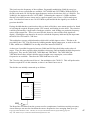
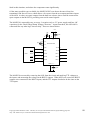
work. The alternative given is for a single chip microcomputer, and involves simply connecting
Copyright Theo Markettos 1997. This may be used for educational and non-profit making purposes
only. The author may be reached at theomarkettos@letterbox.com
6