1
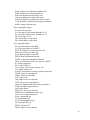
function to calculate runoff
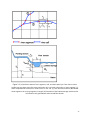
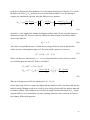
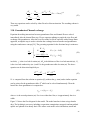
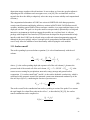
hc is h in flow domain, hI is h in impervious ponding, h is vadose zone h
ho is initial abstraction of ponding layer
hback is the barrier height for flow domain to flow back (an offset)
which should be the difference between average elevation and bottom elevation of the cell
imp is the impervious cover (fraction). higher the imp, higher direct runoff (higher f2)
<-> SPDXU (vdata.F90)
Compute b = full(A) * u
A(:,i) is the d(i)-th diagonal of the full matrix
A(I,i) are the intersecting elements of the i-th diagonal with the I-th row of the full(A)
if d(i)<0, then the first abs(d(i)) elements are zero (program don't use)
if d(i)>0, then the last d(i) elements are zero (program don't use)
it is expect u(K) can go out of bound. If no error is reported, let it be
flag>=1, b = full(A)' *b
<-> SURFACE (Flow.F90)
This function takes care of ET, CANOPY, DEPRESSION STORAGE
Rule of Thumb: Should not use pointer for output unless it is very clear given the context
CH AOPEN G SHEN
Code Unit: m
<-> Solar_Radiation.m
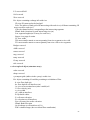
with numerical input, calculate the solar radiation for a given year
Input arg: latitude = North Latitude (35N = 35, 25S = -25), degree
longitude = East Longitude (75E = 75, 45W = -45), degree
elevation (m)
year = eg. (2000)
weatherdata, which has the following format
Day of year, min. air temp, max. air temp, rainfall
Each day of year is on a separate line, missing values can be skipped.
Output arg: Rs = solar radiation (W/m2)
d_T = T_air_max - T_air_min, extreme temperature change of the
tau value for each day
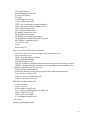
<-> THOMAS (vdata.F90)
This program does not care about a(1) and c(N)
All BC should be embedded into coefficients
this programs solves for tri-diagonal matrix in the form of
aX(i-1)+bX(i)+cX(i+1) =d
<-> TV.m
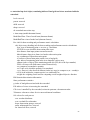
the main visualization function used by the GUI display menu
<-> UNCONFINED (prism.F90)
69