1
Islet Assay using the XF24 Islet Capture Microplate
Day of the Assay:
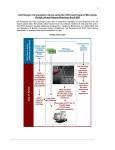
Figure 3 | Steps outlined in Day of Assay/Step 3
1. Add whole islets and capture screens to the wells.
Face-up: Pre-wetting
of screens to remove
air bubbles.
a. Aspirate islets from petri dish and dispense into a 50 ml tube.
b. Wash 1X in MA Media.
c. Remove supernatant and re-suspend in 2 ml MA Media.
d. While creating turbulence in the tube with a 20 μl
pipettor, take 20 μl aliquots and place as a drop on a
culture dish – make 3 drops total (this gives you ~3% of
the islets).
Use capture
screen Insert Tool
e. Count islets under a dissecting microscope.
This will give you an average amount of islets per
volume from which you can estimate the total number
of islets.
f. Determine the count of the islets, and adjust volume
so you get ~70 islets for every 100 μl of medial (700
islets/ml).
g. Add 400 μl MA Media to each well of the XF24 Islet plate.
h. Add 50 μl of the islet suspension to each well, and repeat
so each well gets a total of 100 μl of the islet suspension.
Press firmly into place to capture screen
Final volume should be 500 μl per well.
Screen Capture
Tool (Head)
i. When islets are seeded use a 20 μl pipette to move all of
the islets ionto the depressed chamber in the bottom of
the well.
This step is tedious – use a dissecting microscope to
be sure all of the islets are in the depression at the
bottom of the well as in Figure 2.
2. Add screens by pre-wetting them in MA Media in a small
Petri dish to remove any air bubbles. (See Figure 3)
a. Use a pair of sterile forceps to position the screens so
that the ring is facing up. (Figure 3)
Ring
Screen
b. Use the capture screen insert tool to pick up an islet
capture screen from the petri dish.
c. Carefully place the islet capture screen in the bottom of
each well using the capture screen insert tool. (Figure 4)
Figure 2 | Be sure all of the islets are in the depression at the bottom of the well.
Move islets into the
depression at the
bottom of the well
Well
Cells
www.seahorsebio.com
3