1
Always leave at least 20 minutes between drinking and testing
If you do not wait 20 minutes before testing, the reading will measure the alcohol in your mouth,
which is many times that related to your blood alcohol level. The detector contains a highly sensitive
semi-conductor sensor, and not waiting the required time could damage (saturate) this sensor and
can cause all future readings to be inaccurate. Please also ensure you do not blow any smoke or
liquid into the unit, or the same damage can result and de-calibrate the detector.
Press the ON/OFF power switch. The detector will start to count down from 60 to 00 on the display.
The warm up and cleaning cycle will prepare the sensor for testing.
After hearing a BEEP and the red READY light comes on, take a deep breath, then gently and
steadily blow into the breath intake until you hear the second BEEP. You will blow for 5 seconds.
Make sure your lips are sealed around the pipe and your hand has not covered the air outlet.
After the red display light blinks for 4 seconds, the test results will be displayed by 2 digits and
remain on for 15 seconds. If “rP” is displayed, the sample was insufficient (either too soft, or too
short). Press the ON/OFF button again to re-test.
How to Analyze the Results?
◊
If you consume very little alcohol, your actual concentration may be below 0.02% BAC and the
reading may not be activated. However, the display will read 00
◊ If the sensor is saturated, the display reads “H” and the red lamp will flash along with the BEEP
sound. This can occur if a subject blows alcohol from their saliva into the tester; always leave at
least 20 minutes between drinking and testing. Turn the unit off and leave for 30 minutes before
retesting. If Sn or PL is then displayed, the unit may require servicing—please contact us.
◊ If Er is displayed, the sensor Recognition Technology has detected a contaminated or polluted
sensor and the detector will require re-calibration—please contact us via the details on the back of
this manual for further information.
◊ Low Battery: Lo is displayed, the battery requires replacement
The UK Drink-Drive limit is 0.08 BAC% (shown as 08 on the AlcoHawk Slim)
Precautions
1.
Avoid testing in strong winds, in a closed room with a heavy smoke, or where a lot of alcohol
is being consumed. Do not blow cigarette smoke, food or liquid into the instrument
2.
The ALCOHAWK SLIM is designed for use in a temperature range of 10 – 40 (C) or 50-104
(F). Operation of the unit in extreme temperature ranges above or below this range may
affect the accuracy of results.
3.
Avoid testing in the presence of any substances that contain methyl alcohol, isopropyl
alcohol or acetone. These substances may interfere with the results of the test.
4.
Conditions that increase the amount of ketenes on the breath, such as diabetes and low
caloric intake, may cause a false positive test.
5.
DO NOT DRINK AND DRIVE. Always have a designated driver if you are drinking
Alcohol. The only safe limit is ZERO.
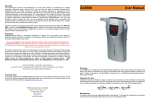
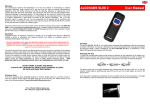
ALCOHAWK SLIM
User Manual
How does it work?
When you drink alcohol it passes through the lining of the stomach into the blood supply. As the
blood moves around your body it is filtered by the liver (which extracts the alcohol over a period of
time) but also passes through the lungs. At the same time as the oxygen in your breath passes
through the alveoli into your blood, a certain amount of the alcohol that is carried by the blood passes
back the other way. It is therefore important to measure deep lung air as this is where the blood has
been in contact with the air in the lungs. A breath from any other part of the lungs will have a lower
alcohol concentration and can give a lower reading than should be the case.
To achieve a consistent reading, a consistent sample of deep lung air is therefore required. LawEnforcement devices measure an absolute quantity of air (usually 1.7ltr) each time they are used and
employ a chemical fuel cell to measure alcohol concentration. This however makes such devices
significantly more expensive to manufacture than personal detectors like this that use a “timed blow”
& semi-conductor sensor, but with practice the user can achieve a reasonable level of accuracy by
ensuring that as far as possible the same blow pressure is used each time a sample is taken.
How to get the most from your Breathalyser
When first using the device, 20 minutes after your last drink try testing yourself three times,
approximately two minutes apart, in order to “bracket” the readings. An average reading can then be
assessed, as can the consistency of the blow level required. Note the reading, and then test again
30 minutes later and so on until the unit reads zero. Further information is available on the website—
go to www.UKBreathalysers.com and click on “FAQ”.
Try the unit on others; you are likely to find considerable variance in the way in which individuals
metabolise alcohol, depending upon body mass, when they last ate, time of day etc. After a while you
will start to develop a reasonable idea of the way in which you personally react to Alcohol and you
can then modify your drinking appropriately to ensure that you always leave a more than adequate
period after drinking and before driving.
UKBreathalysers would always recommend you do not drive with ANY alcohol in your system, and
that you leave a substantial safety margin between the time you believe you have reached a zerolevel and the point where you may consider driving. Never rely solely upon the readings of this
detector in determining your fitness to drive!
Disposable Mouthpieces
Your detector is equipped with removable / disposable mouthpiece. For all sanitary considerations
replace and dispose the mouthpiece when testing others. To reorder please visit our online store or
call our order desk.
Calibration Procedure
If your device is providing inconsistent, unusually high or low readings, or no readings at all, your
device may need to be re-calibrated. In addition, the breathalyser should be re-calibrated at least
once every 6-12 months. More frequent calibrations may be required depending on frequency of use.
For detailed information on how to have the device re-calibrated, please see our Website.
Cleaning
Although it may seem logical to clean the alcohol detector with alcohol or other cleaning agents, in
reality, this is very harmful to the semiconductor sensor in detector. All semiconductor sensors are
intolerant to high doses (saturation) of alcohol, and other cleaning or anti bacterial agents. Simply
wipe the unit over with a damp (not wet) cloth and dry thoroughly.