1
During the last year we got some questions from our customers regarding this paper. Usually, those are
customers who already use our equipment and they do not understand what is wrong with their system (or
with the researchers…). Other inquiries came from new customers who wish to purchase a new HWA
system where that paper was forwarded to them by the competition.
The "competition" is not necessarily the companies that you already know. It is also a research group from
the University of Melbourne along with the research group from the Princeton University. Those groups try
to market their "MUCTA" homemade anemometer together with Princeton university fragile "NASTAP"
probes. In order to promote their product, they wrote a special paper comparing the anemometers. This
paper is full of mistakes and "twisted" measurement results, while making wrong comparisons and using a
new theory they invented from their imagination about signal processing and Fourier transform in non-linear
systems... They use the paper in subject as a reference and they already presented their paper and E-mailed it
to many of their colleagues in Germany and other countries, although the paper was not approved for
publication and was never published by the "experiments in Fluids" journal (Springer). It seems that
they cannot market their anemometer without throwing some mud on the competition.
The purpose of this paper is to contradict all of those rumors spread by the Australian/Princeton groups
about our anemometers and to show the real measurements "behind the scenes" which were sent to me by
P.C. Valente himself during his research work. It also shows how researchers which tend to compare and
criticize anemometers do not understand basic things about the operation of the anemometer, it's pulse and
square wave response (and the differences between them), not to mention things that every amateur in
electronics and fluid dynamics should know about the behavior of a non-linear third order system...
Here are the main incorrect things in Valente and Prof. Vassilicos paper:
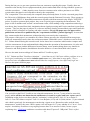
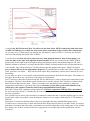
1. P.C. Valente and Prof. Vassilicos claim that " …found that our AN-1005 unit exhibits problems in its inbuilt signal conditioning unit and its in-built square-wave test." After that, he says again: " This is
unexpected since all square-wave tests indicated that the cutoff frequency was sufficiently high" etc...
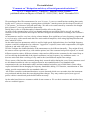
Here are the quotes from his paper:
Can you believe that? Prof. Vassilicos was using this anemometer for over 7 years (when he wrote this
paper) and he still does not know that the anemometer is tested by a pulse and not a square wave!!!
In addition to that, he does not know that the "estimation" (which means F-3db=1/1.3τ or maybe F3db=1/1.5τ as TSI claims or maybe F-3db=1/1.6τ as Beljaars (1976) and Li (2004) claims...) is just a thumb
rule which is good only for anemometers tested using a square wave. Researchers who used the same
anemometers, tested by the same 2 KHz. square wave still argue for 37 years whether it is 1.3τ or 1.5τ or
maybe 1.6τ and they would never stop arguing because there is no answer for that (I wrote a paper
explaining why - Click here)) and those researchers talk about "Expected" -3dB point? This is a joke!
2