1
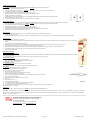
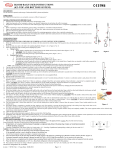
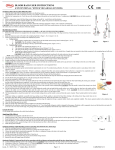
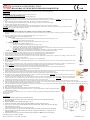
COMPONENT SEPARATION: Classic Bags; 1. Load the full blood filled bag system in the centrifuge buckets. Caution: Proper positioning of the bags will prevent burst of the bags during centrifugation. 2. Centrifuge at 2500 g for 15 mins under +4 C. UYARI: Centrifuge settings may vary according to the centrifuge brand. 3. Place the centrifuged bag to the blood bag extractor. 4. Continue plasma separation as is identified in the separator using manual. 5. Break the break-off part at the opening of the bag by turning left and right. (Figure 6) 6. Transfer the plasma into the transfer bag. 7. If SAG-M bag is used, break the break-off part of the SAG-M Bag and add the SAG-M solution to the primary bag over Red Cells. 8. Seal the redcells bag tube for cross-match. 9. In pediatric bags; transfer bags are connected to redcells bag until they are finished. K2 (Top&Bottom) Bags; 1. Load the full blood filled bag system in the centrifuge buckets. Caution: Proper positioning of the bags will prevent burst of the bags during centrifugation. 2. Centrifuge at 2500 g for 15 minues under +4 C. Caution: Centrifuge settings may vary according to the centrifuge brand used. 3. Place the centrifuged bag to the blood component extractor. 4. Continue plasma separation as is identified in the separator using manual. 5. Break the break-off part at the opening of the bag by turning left and right (Figure 6) 6. Separator device automatically transfers plasma into the transfer bag, and redcells into the SAG-M bag. 7. Seal the tubes after the separation and remove from the set. Figure 6 PROTECTION: 1. Place the red blood cells immediately at 1-6 0C in a blood bank refrigerator which is designed for this purpose. 2. Store the plasma in the freezer. 3. If the separation takes place within 6 hours after collection, it can be stored at -18°C/-25°C for 3 months, -30°C/-40°C for 6 months and at lower temperatures for 12 months. TRANSFUSION: 1. Inspect the container and blood for any defects. 2. Before transfusing the blood, make sure that serological test results are acceptable, cross match test results match with the recipient. If appropriate, apply cross match again at bed side. 3. Use transfusion set compatible with ISO EN 1135–4. 4. Hold the top part of the T port with one hand and bag from the bottom part of T port with other hand, and twist of the upper part by 270 (Figure 7) 5. Keep holding the bag from T port, remove the cap of the transfusion spike with other hand. 6. Insert the spike by ¾ of its length into outlet port. Do not touch the spike of the transfusion set and open outlet port to prevent contamination. 7. After inserting the spike, squeeze the bag to the level that transfusion set filter is filled with blood. 8. Hook the bag from its holder. GENERAL CAUTIONS During storage and transportation; 1. During shipment, up to two blood bags shippers shall be carried at the same time manually or on a trolley. Parcels should not be dropped and/or crushed and should be loaded in a way to prevent fall over. 2. In the warehouse, up to seven parcels can be stored on top of each other and in a way to prevent fall over. Before opening overwrap; 3. Store the overwrapped bags at clean, dry and cool places. 4. Do not use if there is visible sign of deterioration on the overwraps. 5. Blood bags are packed with sterilized. After opening overwrap; 6. Store the bags in their outer wraps at clean, dry and cool places. 7. Bags should be used within 10 days after removal of the transparent overwrap. Before usage; 1. Store the closed overwraps at clean, dry and cool places. 2. Intended for human blood and blood components. 3. Sterile and non pyrogenic - Steam sterilization. 4. Do not use unless solutions are clear. 5. Do not use if there is visible sign of deterioration on the bags. 6. Protect the bag and tubing from sharp objects. 7. Do not use if needle protector is opened. Bars on the needle should be in the same line. (Figure 8) 8. Do not recap the opened needles. 9. Do not use if fluid path closures are loose and not intact 10. Do not vent. 11. Store blood between 1–6 0C. 12. Do not add medication to blood. 13. Cross match the contents of the bag with recipient before transfusion. 14. Use transfusion sets in compliance with ISO EN 1135–4. 15. Mix thorougly before use and if necessary, store under controlled conditions to achieve the appropriate temperature. When frozen, plastic is more fragile. After usage: Single use only, Throw to medical waster after use. Caution: In case of reuse, there is infection risk. Figure 7 Figure 8 CAUTION: This medical device contains di(2-etilhekzil) ftalat (DEHP). Considering the animal data’s, precautions should be taken to restrict to be a subject of DEHP especially for certain patients affected on their reproduction and development processes. These patients are newborn boys, infants and children, prepubertal boys and pregnant, and nursing mothers. Please check out the updated literature to give a conscious decision. KANSUK LABORATUARI SANAYİ VE TİCARET AŞ Eski Londra asfaltı, Beşyol Mah. No:4, 34295 Sefaköy, İSTANBUL/TÜRKİYE Tel: +90 212 592 15 76, Faks: +90 212 580 37 72, www.kansuk.com, e-mail: kansuk@kansuk.com kt_kk_4 -58690 / Rev: 1 / Issue Date: 27.08.2014 Page 2 / 2 CAPA NO: 125/14