1
CreationOnline
Protection of integrity
Data integrity is said to be preserved if the data received over a network connection by the receiver is
identical to that sent by the sender.
Session integrity is said to be preserved for a network connection if all packets sent by the sender are
received by the receiver in the correct sequence with no losses or additions. In addition, there must be
no possibility of replaying either the session itself or individual packets at a later time.
Detailed description of deployment
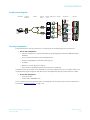
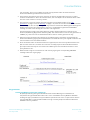
Network integrity protection is implemented at two distinct levels by CreationOnline:
• Integrity protection mechanisms integrated by SSL.
• End-to-End (E2E) Digital Signatures.
SSL integrity protection mechanisms
The SSL protocol incorporates mechanisms for protecting the integrity of the session and the
data transported over the session. For the CreationOnline implementation, this is achieved using
Message Authentication Codes (MACs) generated using the MD5 and SHA message digest
algorithms.
E2E Digital Signatures
CreationOnline protects the following types of communication using an end-to-end digital
signature.
-
Setting the default predefined security parameters.
-
Updates to predefined security parameters.
-
Deletion of predefined security parameters.
-
Performing a life cycle step of any cash instruction (release, verify, …).
-
Performing a life cycle step of any Triparty Repo instruction (release, verify, ...).
-
Performing a life cycle step of the securities instruction (release, verify, …).
-
Performing a life cycle step of the custody instruction (release, verify, …).
-
Performing a life cycle step of the tax instruction (release, verify, …).
-
Performing a life cycle step of the message exchange instruction (release, verify, …).
-
Performing a life cycle step of the Business special service instruction (release, verify, …).
-
Sending a broadcast notification.
-
Adding a distribution list to the system.
-
Updating a distribution list.
-
Managing the life cycle of a report template (create, approve, …).
-
Managing the life cycle of a user, user group or OU (create, approve, …) including
CreationDirect.
-
Generating credentials.
-
Performing any Vestima+ operation.
Depending on the context, this signature is either (a) generated on the end-user workstation and
verified on the CreationOnline application server or (b) generated on the CreationOnline
application server and verified on the end-user workstation.
Clearstream Banking, Luxembourg
Security Guide
November 2014
1—9