1
Project No. 004074
NATURNET-REDIME
D.4.2.1
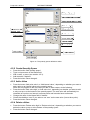
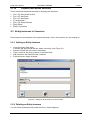
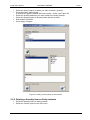
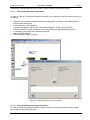
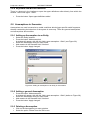
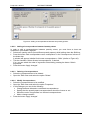
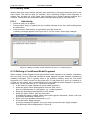
• Press the button ‘Open quantity definitions editor’.
The quantity definitions editor will appear (see Section 4.4).
6.7 Values in Model Fragments
It is possible to set a value on a quantity magnitude, or on a derivative.
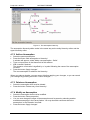
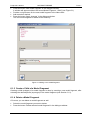
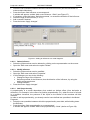
6.7.1 Set a Value on a Quantity Magnitude
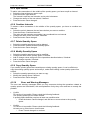
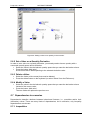
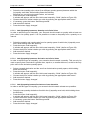
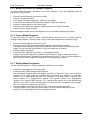
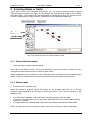
In order to set a value on the magnitude of a quantity, your model fragment must contain a
quantity.
•
•
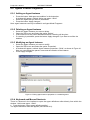
Select the value in the quantity space that you want the quantity to have.
Press the button ‘Add value’ in the 'Consequence' or 'Condition' column of the button
bar.
A red (condition) or blue (consequence) arrow flag will appear next to the selected value.
6.7.2 Set a Value on a Derivative
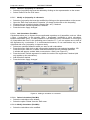
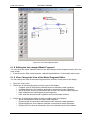
In order to set a value on the derivative of a quantity, your model fragment must contain a
quantity.
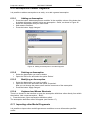
• Select the value in the derivative's quantity space that you want the derivative to have.
• Press the button ‘Add value’ in the 'Consequence' or 'Condition' column of the button
bar.
A red (condition) or blue (consequence) arrow flag will appear next to the selected value.
6.7.3 Delete a Value
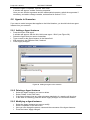
•
•
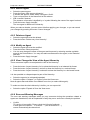
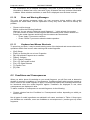
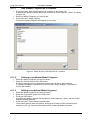
Select the Value (a blue or red arrow) that must be deleted.
Press the delete button on the keyboard (or delete via Edit menu).
6.7.4 Modify a Value
•
•
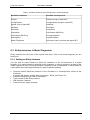
Select the value in the derivative's quantity space that you want the derivative to have
instead of the current value.
Press the button ‘Add value’ in the 'Consequence' or 'Condition' column of the button
bar.
Setting the new value will delete the previous one.
6.8 Dependencies in Model Fragments
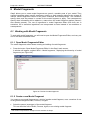
Behavioural dependencies describe relations between behavioural features. There are three
kinds of dependencies: causal dependencies, inequalities and correspondences.
6.8.1 Causal Dependencies
Causal dependencies are used to model how processes affect the system. Direct effects are
modelled as influences, indirect effects are modelled as proportionalities. Both can be either
positive or negative.
6.8.1.1 Add Influence
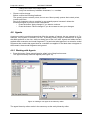
An influence is a causal dependency that models a direct effect (from value to derivative). For
example, in the case of a positive influence (I+), when a liquid flow has the value plus, the
amount of liquid at the destination will increase.
In order to add an influence, your model fragment must contain two quantities.
Note: influences cannot be added in a Static Model Fragment.
69
/ 107