1
PDETool user manual
Introduction
PDETool is a multi-formalism modeling and simulation framework for discrete-event
models based on a unified abstract description named SDES [1]. It uses a simulation
engine for simulation of discrete-event simulation of stochastic models called SimGine.
PDETool can be easily extended to support variety of stochastic formalisms. It currently
supports SANs, CSANs, GSPNs and SRNs (which will be explained next).
The Software Architecture
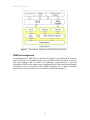
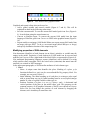
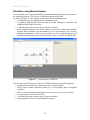
The software architecture of PDETool, shown in Figure 1, is separated to two layers: a
front-end layer and a back-end layer as follows:
• Front-End Layer (PDETool interface): This layer provides some graphical user
interfaces and a model translator. The user interfaces includes editors (model editor,
reward variables editor, global variable editor), SimGine interface, simulation and
animation GUI described in the previous subsection. Each formalism supported by
the tool has its own editor, translator and an optional graphical animator which are
responsible for communicating with the underlying layer. This layer can be viewed
as an interface between users and the back-end layer.
• Back-End Layer (SimGine engine): PDETool uses SimGine simulation engine as
the underlying layer. This back-end layer is responsible for simulation of the model
and evaluating reward variables and also provides model animation facility. As we
mentioned before, for simulating a model based on particular stochastic discreteevent formalism, a model translator prepares the input model of SimGine mapped
from the original model where these two models should be behaviorally equal. As
depicted in Figure 1, the internal architecture of SimGine includes parser, code
generator, utility library, simulator, animator and SDES simulation manager.
3