1
Agile Requirements
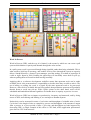
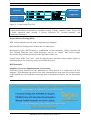
Visualization is a useful tool to help business communicate better with IT. Answering these
questions can give you an indication of the level of visualization requirements your project
demands. Nevertheless, you may also find that visualization is not required.
Once you have requirements, what do you do with them?
It is not enough to get your requirements and or user stories on paper or in a tool, distributed to
your team, and then hope that they are met. Once requirements are defined and captured, it is
essential that they are managed actively and correctly. This is even more important in agile as
each iteration is a pressure cooker where user stories and requirements need to be defined,
estimated, re-estimated, developed and tested in a short period of time. Here are some basics
tenants to follow for successful RM:
Prioritize requirements and user stories so resources are assigned to address the highestpriority, highest-risk requirements. This helps prevent a lesser requirement (with perhaps a more
vocal stakeholder) taking precedent over other more important requirements.
Baseline requirements to set measurable success standards/thresholds for all requirements so
that all stakeholders are on the same page. Achieve sign-off agreement between business
analysts and between business and IT.
Track changes to compare current baseline requirements against pre-defined thresholds.
Business analysts can flag requirements exceeding change thresholds, assign risk, and take
appropriate action - for example doing this may show that a user story is too large as is and
needs to become an epic with multiple user stories under it.
Defining, capturing, and managing requirements properly in this way can add tremendous value
to business, IT, and to the ultimate success of the software application or service developed.
Improper RDM, or merely choosing to place less importance on it, can result in a cascade of
negative effects that not only affect software in the development and testing stages, but the
business as a whole. For example, according to Gartner, 40 percent of unplanned downtime is
caused by application failures, costing an average of $100k per hour for mission-critical
applications. [2] A large portion of those failures are due to poor requirements introduced during
the development phase.
The problems of poor RDM
The unfortunate results of poorly defined and managed requirements have been known and even
quantified for some time. Defects are most often introduced early and found later in the
application lifecycle. This is, in part, because business analysts have historically worked in an
ad hoc way using word processing and spreadsheet software. Those were the only options
available until recent RDM-specific software tools helped them work more systematically.
Working ad hoc with tools not designed specifically for the job naturally leads to problems. The
National Institute of Standards and Technology (NIST) estimates that 70 percent of software
defects are introduced in the requirements phase [3]. The later defects are found in the
application lifecycle, the more expensive they are to fix. This issue is compounded in agile
because if each iteration is bogged down with defects from the start how are the teams meant to
move forward and isn’t one of the aims of agile to produce higher quality software?
Methods & Tools * Summer 2010 * Page 33