1
ISSN (Online) : 2278-1021
ISSN (Print) : 2319-5940
International Journal of Advanced Research in Computer and Communication Engineering
Vol. 3, Issue 11, November 2014
What is Android?
Android is a software stack for mobile devices that
includes an operating system, middleware and key
applications. It's maintained by Google, and comes in a
few different versions. At the time of writing, mobile
phones run a variant of version 2 of Android, while most
new tablets run a variant of version 3. The Android SDK
provides the tools and APIs necessary to begin developing
applications on the Android platform using the Java
programming language. Android uses the Dalvik virtual
machine with just-in-time compilation to run
Dalvikbytecode, which is usually translated from Java
byte code. Android has a large community of developers
writing applications ("apps") that extend the functionality
of the devices. Developers write primarily in a customized
version of Java.
Features:
Messaging: Support SMS as well as MMS.
Integrated browser: Android supports integrated web
browsers based on the open source Web Kit engine.
Android’s Web Kit-based browser got a significant speed
bump. Besides speed gain, Android’s browser now
supports copy and paste within web pages, user-selectable
text-encoding, unified Go and Search box and the ability
to search for text within a page.
Media support : The main benefit of using android is the
media support provided for common audio, video, and still
image formats (MPEG4, H.264, MP3, AAC, AMR, JPG,
PNG and GIF) Support to Bluetooth, 3G, and Wi-Fi:
Besides an improved hands-free experience, Android 1.5
now supports stereo Bluetooth (A2DP and AVCRP
profiles), in addition to auto-pairing feature. It also
supports latest technology such as 3G and Wi-Fi.
Rich development environment : Android is one of the
richest environments for developing mobile applications
because it includes a device emulator, tools for debugging,
memory and performance profiling, and a plug-in for the
Eclipse IDE.
3.1.4 Price:
For a OS that is being available on a number of brands,
this OS is also being used widely on a number of budget
phones, which is not the case of other self-owned OS,
which means that they can reach out to more customers
and are therefore naturally and automatically very highly
popular.
3.2 Use of Android for App Development:
Android is a software stack for mobile devices that
includes an operating system, middleware and key
applications. The Android SDK provides the tools and
APIs necessary to begin developing applications on the
Android platform using the Java programming language.
Application framework defined the common structure of
programs in the specific domain. Essentially, a framework
is a component that can be reused, it set the architecture of
applications and incorporated as a set of abstract classes
and the cooperation of their instances. Android is an open
source operating system based on Linux kernel and
launched by Google. Unlike PC operating system, mobile
phone operating systems are constrained by their
hardware, storage space, power dissipation and mobility
conditions. Compared with the development of
applications on PC, there are some different features of
applications on mobile phone operating System.
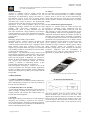
Fig. 2. Example of an image with acceptable resolution
3.1 Why Android?
3.1.1 This Is Standalone Software:
Google’s Android OS is standalone software and that any
phone manufacturing company can lend this software to
be used on their Smartphone.
IV. DATA FLOW DIAGRAM
3.1.2 Android Is More User Friendly:
As This Has the Backing from Google Carrying the brand
name of Google, Android users get plenty of access to
Google products and therefore find Android more user
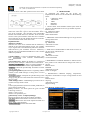
Data flow diagram show the actual transfer of data
friendly than other Smartphone.
between different units. It divides in two levels. This
diagram shows the flow of data of our system. In a mobile
3.1.3 Speed:
device system and system services are there. When user
While Apple and many of the other OS are still thinking of
sends sms it goes to the system of the mobile device. Then
integrating 4G technology, Android OS has reached a
system of mobile device sends it to the system services of
level of sophistication in utilizing this technology that they
can provide a platform on a phone that has the hardware to
back up with blazing internet speed.
Copyright to IJARCCE
www.ijarcce.com
8482