1
530
B. Bettig, J. Shah / Advances in Engineering Software 30 (1999) 529–541
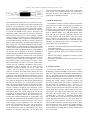
Fig. 1. Elements and environments of a CAD program.
particular toolkit, however, the developer is again locked in
to using the corresponding data structures and function
calls. Moving to a different toolkit requires modification
of the code. The problem is pervasive because it is repeated
in each individual area.
Even though the integration issues in each area are different, they share the same underlying generic problems: (1)
data representations, even for the same information, are
incompatible between APIs, sometimes simply because of
different base classes, (2) different ways of communicating
with libraries, i.e. different functions or callbacks. There is
also a desire for software tools to be ‘‘pluggable’’, i.e. these
tools should either require no modifications to existing code,
or the addition of new code to integrate them into the user
interface and data model environments. In Fig. 1, tools are
shown using APIs from the preceding three levels. The tools
reside in an application shell that serves to hold the tools
together as a single program, to provide for interactions
between tools and to control when each tool is active. A
shell can also provide various degrees of insulation from
changes to APIs by itself acting as an interface to an API
(dotted lines). The shell must be compiled for one or more
platforms (e.g. NT, OS/2…) and tools must be written in
some language (e.g. Java, C11…) which largely depends
on the type of architecture and the level of insulation
provided by the shell in that architecture. The problem of
Mechanical-CAD software tool integration is very similar to
the problem of integrating Computer-Aided Software
Engineering Tools (CASE tools) except that here the integration must be much tighter to allow tools to share the same
windows (e.g. geometry viewers) and the model data in the
immediate memory.
In this big picture this article focuses on the second
problem of incompatibility given earlier: differences in
forms of communication between libraries and types of
messages passed. The focus is only on tool integration,
but this is found later to solve many API product integration
problems too, as a tool can itself act to integrate an API
product. The aim is to derive an architecture which is optimal, in terms of promoting code re-usability and ease of
integration (pluggable), and which is complete, to avoid
changes to it in the future. The architecture should define
the types of software objects required and the types of
messages that must be passed between them. In the end,
separately developed tools (or API products) should
combine seamlessly into a highly graphical and interactive
environment.
2. Literature review
For our purposes we are interested in generic architectures that integrate software tools and API products as parts
of the same application. Integration issues related to integrating a single API product into an application are brought
out by Shah et al. [1]. In particular, interfaces can be static or