1
system will offer this information in some form. Note that (transactional) systems
such as ERP, CRM, or workflow management systems indeed provide event logs.
It is also important to note that the applicability of process mining is not limited
to workflow management systems. The only requirement is that it is possible to
collect logs with event data. These event logs are used to construct a process
specification which adequately models the behavior registered.
The term process mining is used for the method of distilling a structured
process description from a set of real executions. In this paper we do not give
an overview of related work in this area. Instead we refer to the survey paper [6]
and a special issue of Computers in Industry [7].
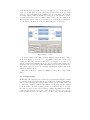
In this paper, the process mining tool EMiT is presented. Using an example
log generated by Staffware, we illustrate the various aspects of the tool. In Section
3, the XML format used to store logs is described. Section 4 discusses the three
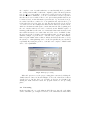
main steps of the mining process. Section 5 discusses the export and visualization
of the Petri nets discovered in the mining process. Finally, we conclude the paper.
2
Running example
To illustrate the functionality of EMiT, an example log generated by the Staffware
[12] is used. Since Staffware is one of the leading workflow management systems,
it is a nice illustration of the practical applicability of EMiT. For presentation
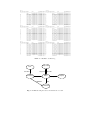
purposes we consider a log holding only six cases, as shown in Table 1.
Although the log presented here is rather small (only six cases) it is already
hard to find the structure of the underlying workflow net by just examining
the log. Therefore, a tool like EMiT is needed. However, before EMiT can be
used, the log is translated into a generic input format that is tool-independent,
i.e., EMiT does not rely on the specific format used by a system like Staffware.
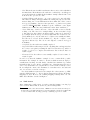
Instead there is a “Staffware adapter” translating Staffware logs to the XML
format described in the next section.
3
A common XML log format
Every log file contains detailed information about the events as they take place.
However, commercial workflow system use propriety logging formats. Therefore,
EMiT uses a tool-independent XML format. Since events in the log refer to state
changes a first step is to describe the states in which each specific task can be.
For this purpose we use a transactional model.
3.1
A transactional model
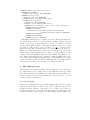
To describe the state of a task the Finite State Machine (FSM) shown in Figure 1 is used. The FSM describes all possible states of a task from creation to
completion. The arrows in this figure describe all possible transitions between
states and it is assumed that these transitions are atomic events (i.e. events that
take no time) that appear in the log. All states and the transitions between those
states will be discussed below.