1
1.00
Purpose and use
1.01
Manufacturer
V. Guldmann A/S
Graham Bells Vej 21-23A
DK-8200 Aarhus N
Tlf. + 45 8741 3100
Fax + 45 8741 3131
www.guldmann.com
1.02
Purpose
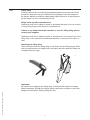
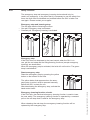
GH1 is a ceiling-mounted hoist which covers the need for lifting or moving a
person with disabilities in the home care sector, nursing homes, rehabilitation
centres, riding schools and swimming pools.
•
•
•
•
•
•
•
•
1.03
•
© Guldmann GB/US-1706/03/2011 • # 550865
•
•
•
•
•
•
•
Conditions for use
The use of the GH1 is subject to the following:
The GH1 should only be used by trained personnel.
The maximum nominal load, 175 kg (385 lbs), 205 kg (450 lbs), respectively,
must not be exceeded (section 1.04).
The instruction offered by Guldmann to all customer groups in connection
with the purchase of a ceiling-mounted hoist has been received.
The helper pays attention to the well-being of the user when using the hoist.
The hoist is used in rail systems which are installed, tested and approved
according to DS/EN 10535 and Guldmann’s stipulations.
Only technicians who have been certified by Guldmann may install and test
the rail systems.
The hoist is used with a Guldmann lifting hanger (section 1.08).
The hoist is used with a Guldmann lifting sling or with other suitable slings
(section 1.09).
Important/Precautions
Read the instructions carefully before using the GH1 and in connection with
cleaning and service of the hoist.
The GH1’s maximum load must never be exceeded.
The GH1 may only be used to lift a person.
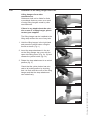
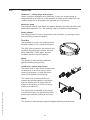
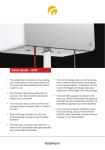
The red strap for the emergency stop and the emergency lowering must be
adjusted to the helper’s reach, and must not be removed.
If the GH1 fails while in use, stop using the hoist and contact the Guldmann
Service Team for repair.
The GH1 is controlled by a microprocessor PCB, which can be damaged by
static electricity if touched without the necessary precautions, (see point 1.07)
The electronics may only be serviced by Guldmann approved service technicians.
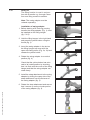
For safety reasons the side cover may only be dismantled when the emergency stop is activated (see point 2.04).
3