1
network task transmitting the encoded frames over the
network. The video task encodes the raw frames and
analyses the content with the aim of detecting a robbery. When a robbery is detected the network task
transmits the encoded frames over the network (e.g.
to the PDA of a police officer). In data intensive applications, such as video processing, a context switch
can be expensive: e.g. an interrupted DMA transfer
may need to retransmit the data when the transfer is
resumed. Currently, in order to avoid the switching
overhead due to arbitrary preemption, the video task
is non-preemptive. Consequently, the network task is
activated only after a complete frame was processed.
Often the network task cannot transmit packets at an
arbitrary moment in time (e.g. due to network congestion). Employing FPDS and inserting preemption
points in the video task in convenient places will activate the network task more frequently than is the case
with FPNS, thus limiting the switching overhead compared to FPPS and still allowing exploitation of the
available network bandwidth.
[10] also propose the notion of optional preemption
points, allowing a task to check if a higher priority task
is pending, which will preempt the current task upon
the next preemption point. At an optional preemption point a task cannot know if a higher priority task
will not arrive later, however if a higher priority task
is already pending, then the running task may decide
to adapt its execution path, and e.g. refrain from initiating a data transfer on a exclusive resource that is
expensive to interrupt or restart. Optional preemption
points rely on being able to check for pending tasks
with low overhead, e.g. without invoking the scheduler.
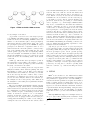
Figure 1. FPDS task with a DAG structure
for an example of the latter.
[9] presents a rate-monotonic with delayed preemption (RMDP) scheduling scheme. Compared to traditional rate-monotonic scheduling, RMDP reduces the
number of context switches (due to strict preemption)
and system calls (for locking shared data). One of the
two preemption policies proposed for RMDP is delayed
preemption, in which the computation time Ci for a
task is divided into fixed size quanta ci , with preemption of the running task delayed until the end of its
current quanta. [9] provide the accompanying utilization based analysis and simulation results, and show
an increased utilization of up to 8% compared to traditional rate-monotonic scheduling with context switch
overheads.
Unlike [9], which introduces preemption points at
fixed intervals corresponding to the quanta ci , our approach allows to insert preemption points at arbitrary
intervals, convenient for the tasks.
[3, 4] correct the existing worst-case response time
analysis for FPDS, under arbitrary phasing and deadlines smaller or equal to periods. They observe that the
critical instance is not limited to the first job, but that
the worst case response time of task τi may occur for
an arbitrary job within an i-level active period. They
provide an exact analysis, which is not uniform (i.e.
the analysis for the lowest priority task differs from
the analysis for other tasks) and a pessimistic analysis,
which is uniform.
The need for FPDS in industrial real-time systems
is emphasized in [10], which aims at combining FPDS
with reservations for exploiting the network bandwidth
in a multimedia processing system from the surveillance domain, in spite of fluctuating network availability. It describes a system of one of our industry
partners, monitoring a bank office. A camera monitoring the scene is equipped with an embedded processing platform running two tasks: a video task processing the raw video frames from the camera, and a
3
RTAI
RTAI2 is an extension to the Linux kernel, which
enhances it with hard real-time scheduling capabilities
and primitives for applications to use this. RTAI provides hard real-time guarantees alongside the standard
Linux operating system by taking full control of external events generated by the hardware. It acts as a
hypervisor between the hardware and Linux, and intercepts all hardware interrupt handling. Using the timer
interrupts RTAI does its own scheduling of real-time
tasks and is able to provide hard timeliness guarantees.
Although RTAI has support for multiple CPUs, we
choose to ignore this capability in the remainder of this
2 The
[1].
2
code base used for this work is version 3.6-cv of RTAI