1
130
ECMO Simulation User Manual (v5.7)
of blood in the reservoir). In contrast, during VA ECMO, the perfusionist can only adjust
LV preload by changing the main pump flow rate. As a result, ‘tight’ control of systemic
blood pressure is more difficult to achieve during VA ECMO than during surgical CPB.
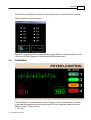
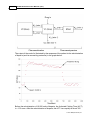
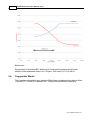
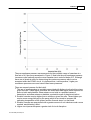
In this simulation, note how the mean arterial pressure (MAP) has risen from ~ 65 mm
Hg before bypass to ~ 105 mm Hg. This higher mean pressure reflects the fact that the
patient’s total systemic flow (LV output + ECMO output) is now higher than before
ECMO and that the patient’s Systemic Vascular Resistance (SVR) is little changed. As
a result, mean arterial pressure is considerably higher.
Under normal circumstances, if we were on surgical CPB, we would respond to this
scenario by temporarily reducing the arterial pump flow at the same time as minimizing
left ventricular (LV) preload by ensuring that drainage into the venous reservoir was
unimpeded. However, during VA ECMO, if we reduce blood flow rate, we will divert
more flow through the pulmonary circulation, increase LV preload, and the left ventricle
will begin to eject again. In practice, we can only adjust SVR by the use of vaso-dilator
or constrictor therapy and we can only adjust circulating blood volume by fluid
administration or diuretic therapy.
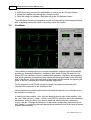
After a few minutes, perform a blood gas analysis:
<Investigations><Arterial Blood Gas Analysis>
And note that the PaO2 is now ~ 500 mm Hg and that the PaCO2 is within the normal
range. These results are typical for a normally-functioning VA ECMO system when
100% oxygen is administered under full bypass conditions. It is debatable whether or
not a patient should be maintained on full bypass if clinically satisfactory conditions can
be obtained by using only partial support.
Full bypass abolishes pulmonary arterial flow and entails the risks of left heart
distension, pulmonary or left heart thrombosis and coronary ischaemia (due to
increased left ventricular wall stress).
In contrast, partial bypass maintains pulmonary flow and reduces the risks of left heart
distension and thrombosis, but creates the possibility of differential hypoxia and the
requirement for some form of ongoing ventilation.
Finally, we’ll examine the effect of the administration of a powerful vasodilator (Sodium
Nitroprusside (SNP)) on the behaviour of the EMO system.
Commence an infusion of SNP by:
Selecting <Therapeutic Interface> <Infusion Drug> <SNP (100mcg/ml)>
And starting it at 20 ml/hr:
Slide green slider to <20> and click <Set>
After about 5 minutes, note that the:
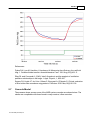
Mean arterial pressure has fallen to 65 – 70 mm Hg;
The pump flow rate has increased to ~ 5 lpm and
The CVP has fallen.
© 2010 MSE (Australia) PL