1
DIGIspy
4
USER MANUAL
The Sampling Frequency Indicator shows which frequency is coded in the
Channel Status Bits. If the input signal complies with the standard, this
should be identical to the actual sampling frequency. DIGIspy performs a
check on this and blinks the kHz indicator if differences are encountered.
An in-depth explanation of this issue is given in sections 4.1.1 and 6.1.3.
2.1.2 Protocol Analyzer Display
Below the Signal Quality Display, the details of the protocol of the data stream
are displayed.
1
The most important information in the Protocol Analyzer
Display is the Mode Indicator. It shows if the data
stream complies to the
AES/EBU (PROFESSIONAL)
or SPDIF (CONSUMER)
MODE.
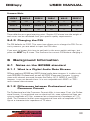
EMPHASIS 50-15 J.17
USER DATA AES18
SCMS COPY PROHIBIT
PROFESSIONAL
MODE
CONSUMER
MODE
DATA INVALID
NON-AUDIO
MULTI-CHANNEL
A number of protocol details depend on this mode. Consequently, some indicators of the Protocol Display are only active in Professional Mode, while others
only have a meaning in Consumer Mode.
2
Emphasis Indicator. Shows whether the data stream was coded with
emphasis, and if so, which type of emphasis has been employed.
Note: DIGIspy does not de-emphasize any signals.
3
4
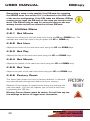
User Data Indicator. Indicates whether user data is present in the input
signal, and if so, which user data mode is used.
5
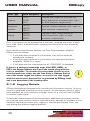
Validity Indicator. Shows whether the audio data being transmitted is
valid. If DATA INVALID is displayed, data will not be output by a D/A converter.
Note: The monitor output of DIGIspy will output invalid data, too, in order
to allow testing.
6
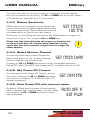
Non-Audio Indicator. Shows whether the transmitted data is linear PCM
audio data or non-linear data (multi-channel audio or computer data). If
the indicator is visible, data is not suitable for D/A conversion, either be-
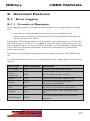
Copy Protection Indicator (Consumer mode only). Shows whether the
signal bears copyright information as per SCMS (Serial Copy Management
System) definition. If SCMS is present, it shows whether copying is allowed or prohibited.
7