1
HAWK-I Template Reference Guide
4.2
VLT-MAN-ESO-14800-4076
10
Science Templates
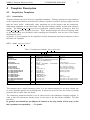
The four science observing templates provide various strategies for the nodding between object
and sky positions and for the jitter offsets between the images taken at the selected object and
sky positions. The most simple and recommended templates are AutoJitter and AutoJitterOffset.
AutoJitter will automatically take exposures in an AAAA sequence, where A refers to the OBJECT
position. The GenericOffset template allows to specify any sequence of object and sky positions.
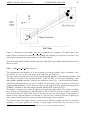
The FixedSkyOffset also automatically takes exposures in an ABBA sequence with positions jittered
with respect to each other, but nods to a fixed, user-defined, sky position. The respective A
(object) positions are randomly jittered with respect to each other, and so are the respective B
(sky) positions. FixedSkyOffset will take an ABBA. . . or an BAAB. . . sequence depending on
whether SEQ.OBSTYPE is set to O or S respectively.
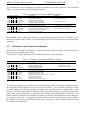
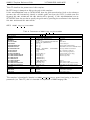
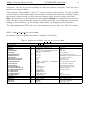
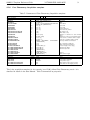
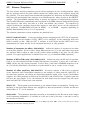
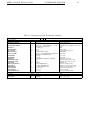
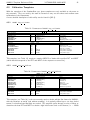
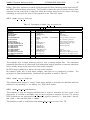
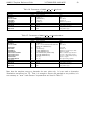
The common parameters to these templates are described here:
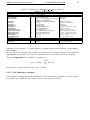
DET.DIT and DET.NDIT:
are the user defined detector integration time (DIT) (for all exposures:
target and sky) and the number of DITs (NDIT) to be averaged 2 by the electronics before the
frame is written to disk. While the DIT is common to both object and sky, NDIT can be set
independently for object and sky for all templates that move to a sky position.
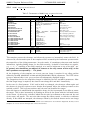
Number of exposures per offset, SEQ.NEXPO: defines the number of exposures to be taken
at each offset position. It can be set to values different from one (1) in the cases where more than
one exposure shall be taken at each (on/off) position before nodding to the next (on/off) offset
position. For typical applications, it remains set to one (e.g for classical ABBA sequences).
Number of AB or BA cycles, SEQ.NABCYCLES: defines how often the AB cycle is repeated.
If set to one, the template will take a simple AB sequence (one offset). If set to two, it will take a
ABBA (object, sky, sky, object) sequence. If set to three, it will take a ABBAAB sequence, an so
on. For best sky subtraction, the number of cycles should be set to a value of two or larger.
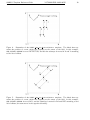
Number of offset positions, SEQ.NOFFSET: the above number of AB cycles is replaced
in the AutoJitter and GenericOffset template by the number of offset positions, NOFFSET. In
the AutoJitter template, the offsets are determined randomly within a box. In the GenericOffset
template, the offset positions are defined by the OFFSET1 and OFFSET2 lists. Typically, both lists
will have the same length, if not, the shortest list (and maybe even the longest list) will repeat
itself until NOFFSET frames have been obtained.
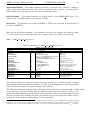
SEQ.FC.ST:
This keyword controls whether to use software flexure compensation. During commisioning it was found that flexures were negligible so that the parameter is hidden and has the
default value of “F” for all templates.
SEQ.FILEID:
This parameter determine the string to be attached to the file names of the images
in the instrument workstation. It is hidden so it can not be set by the user, it can only be set by
the operator at Paranal.
2
Note that the frames will contain the average of the NDIT exposures, NOT a sum, a fact that has to be kept
in mind by the user when reducing the data.