1
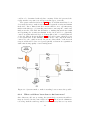
2. Turn the engine on and off using the OS.
3. Change the substituted hub back to a switch.
4. Filter the packets and sort out the packets turning the engine on and
off and save them.
5. Disconnect the OS from the internal network
6. Use Colasoft packet player to replay the captured packets over the
switch on net A.
Result: The attack is successful. An attacker is able to turn the engine
on and off but there are a few assumptions that has to be made here. As
described by Szostak [34] there are security mechanisms in the OS preventing
replay attacks to some extent. The mechanisms does not always seem to
work as intended and if many attacks are carried out in series during a short
period of time the OS goes into a error state, which it recovers from after
10-15 seconds. In that case the attacks are successful, but if the OS does
not go into a error state then the replay attacks are prevented by the OS.
In that case the only solution is to disconnect the OS or make it unable to
respond.
The other assumption that has to be made in order for this attack to be
carried out is that the packets between the OS and PS has to be sniffed in
some way. The first point in the attack procedure is to substitute the switch
with a hub. Since a hub forwards each packet received on all the ports it
makes it a lot easier to listen on than a switch, which only forwards packets
to the intended recipient port. If an attacker has access to the inside of the
system an insertion of a hub between the switch and the OS can be made,
so that the packets can be sniffed. An alternative is to replace the switch
with the hub but that may be more difficult to do in practice.
The success of this attack, although with some assumptions, proves that
these types of systems are vulnerable to replay attacks even if hardware that
can make it hard to accomplish this types of attacks is used.
Pending issues: How can we protect the system against this type of
attacks?
5.2.3
Unsuccessful insider attacks: Force OS forwarding
Purpose: In an attempt to be able to communicate with the inside network
from the outside (which is the Internet perspective in our case) there were
some modifications tried on the OS in order to be able to forward packets
from the outside interface to the inside. Since Windows has the packet forwarding turned on by default some modifications had to be done.
System state prior to attack: System running in normal operational
47