1
The first-order language of arithmetic / 39
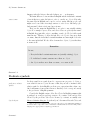
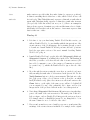
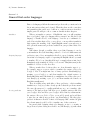
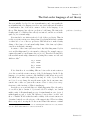
there are too many. The way we get around this is by using what is known as
an inductive definition.
Definition The terms of first-order arithmetic are formed in the following
way:
terms of arithmetic
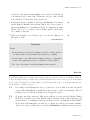
1. The names 0, 1 are terms.
2. If t1 , t2 are terms, then the expressions (t1 + t2 ) and (t1 × t2 ) are also
terms.
3. Nothing is a term unless it can be obtained by repeated application of
(1) and (2).
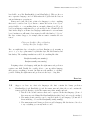
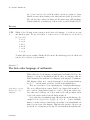
We should point out that this definition does indeed allow the function
symbols to be applied over and over. Thus, (1 + 1) is a term by clause 2 and
the fact that 1 is a term. In which case ((1 + 1) × (1 + 1)) is also a term, again
by clause 2. And so forth.
The third clause in the above definition is not as straightforward as one
might want, since the phrase “can be obtained by repeated application of” is
a bit vague. In Chapter 16, we will see how to give definitions like the above
in a more satisfactory way, one that avoids this vague clause.
The atomic sentences in the language of first-order arithmetic are those
that can be formed from the terms and the two binary predicate symbols, =
and <. So, for example, the fol version of 1 times 1 is less than 1 plus 1 is
the following:
atomic sentences of
arithmetic
(1 × 1) < (1 + 1)
Exercises
1.20
.
1.21
.
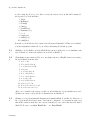
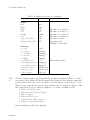
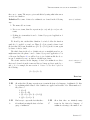
Show that the following expressions are terms in the first-order language of arithmetic. Do this
by explaining which clauses of the definition are applied and in what order. What numbers do
they refer to?
1. (0 + 0)
2. (0 + (1 × 0))
3. ((1 + 1) + ((1 + 1) × (1 + 1)))
4. (((1 × 1) × 1) × 1)
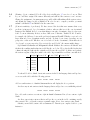
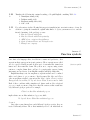
Find a way to express the fact that three
is less than four using the first-order language of arithmetic.
1.22
.
⋆
Show that there are infinitely many
terms in the first-order language of
arithmetic referring to the number one.
Section 1.7