1
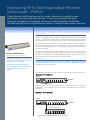
Introducing RFI’s New Expandable Receiver
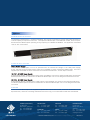
Multicoupler - RxMUX
These Receiver Multicouplers may be used to improve the signal-to-noise
performance of a two-way radio system. They are compatible with both
analogue and digital technologies and also provide the ability to distribute
received signals from a single antenna system to multiple base station receivers.
The Challenge
The two-way radio marketplace is a changing landscape. The introduction of
digital technologies, shared networks, and ever-increasing expectations for
reliability have raised the bar in receiver combiner requirements.
The Solution
RFI is pleased to announce the introduction of a new range of high performance
Receiver Multicoupler products targeted at satisfying these emerging
requirements.
Receiver Multicouplers
These new pRoducTs FeaTuRe:
peRFoRMance & FuncTIonaLITY
12 Vdc operation
“Full-band” operation
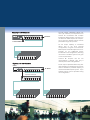
These Receiver Multicouplers provide
unparalleled performance with the
flexibility to configure and expand as
individual customer requirements
demand.
(132 -174 Mhz, 380-520 Mhz
and 698-960Mhz)
In-built amplifier redundancy
Low noise amplifiers (Lna)
ease of expandability
Manual or programmable
gain setting
Integral status monitoring
Local or remote alarm outputs
Local or remote programming
auto-gain adjustment on
partial quadrature amplifier
failure
RFI’s new Receiver Multicouplers have been designed to incorporate high
performance RF specifications and reliability of operation. This high
performance level is coupled with a user-friendly configuration capability and
comprehensive integral monitoring and alarm status capability.
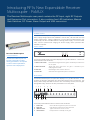
LEDS
GAIN
USB
CONTROLLER
ALARM
RF OUTPUTS
RFI INPUT
TTA Interface
ATTENUATION
EXPANSION PORT
DC I/P
Receiver Multicouplers should always be
linked to an appropriate Receiver
Preselector that passes the desired
receive frequencies and rejects
transmitter or other out-of-band signals.
POWER SUPPLY
Product Description
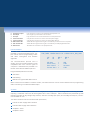
RF InpuT
The RF Input of the Receiver Multicoupler utilises an “n” female
connector. Internal protection is fitted to this input to assist with the provision of
surge protection for the amplifier stages.