1
Input Serial Mesh
Split Mesh
Makeflo
Rocflo
External
Boundary
Conditions
All
Boundary
Conditions
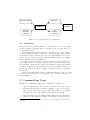
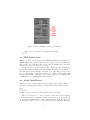
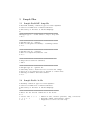
Figure 1: Rocflo input files and processing stages.
1.4
Motivation
Rocflo requires the problem domain to be described as a set of blocks. Each
block is a regular, rectangular array of elements or cells. Together, the set of
blocks is called a mesh.
In parallel, Rocflo assigns each block to exactly one processor– that is,
blocks are indivisible units of computation. This means that a mesh with 16
blocks cannot use more2 than 16 processors of a parallel machine. To use more
than 16 processors, the blocks must be split into smaller blocks before running
Rocflo. Makeflo performs this splitting.
In addition, each block requires boundary conditions– both internal boundaries, which describe how block fit together; as well as external boundaries between the fluid domain and the outside world. Makeflo computes the internal
boundary conditions, and also splits the user-specified external boundary conditions as it splits blocks. These boundary conditions are written to a Rocflo
topology file.
Together, the splitting and boundary condition generation form a pre-processing
step that prepares a mesh for use by Rocflo. The overall processing flow is
shown in Figure 1.
2
Command-Line Usage
Makeflo is a command-line utility. The command-line parameters are:
1. Optional -splitaxis flag. If you prefer to split the blocks only along a
particular axis, specify the axis with “-splitaxis a”, where a is 0 for the i
axis, 1 for the j axis, and 2 for the k axis. The default is to recursively
split along the longest axis, which produces much better results.
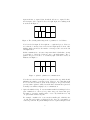
2. Optional -splitrcb flag. By default, makeflo shifts partition boundaries to
ensure the best possible load balance. For example, in cutting a 2-block
2 Since several blocks can co-exist on a processor, a 16-block mesh may be used with fewer
processors.
2