1
BIT CLOCK REGENERATION
ACHIEVEMENTS: introduction to bit clock regeneration. Evaluation using bitby-bit comparison with system bit clock.
PREREQUISITES: completion of at least some of the early experiments of
Volume D1.
ADVANCED MODULES: BIT CLOCK REGEN, LINE-CODE ENCODER,
ERROR COUNTING UTILITIES, INTEGRATE & DUMP. A
BASEBAND CHANNEL FILTERS module is optional.
TRUNKS: optional 208 kHz sine. Refer Laboratory Manager.
PREPARATION
synchronization
Receivers in a digital environment can require synchronization at at least three
different levels:
• carrier synchronization (in the case of bandpass signals)
• bit synchronization (at baseband)
• frame synchronization (at baseband)
This experiment is concerned with the second of these. It assumes either that the
signal has been transmitted at baseband, or successfully recovered from a higher
frequency carrier from which it has been demodulated.
stolen bit clock
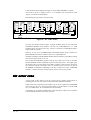
For most TIMS experiments, when a bit clock is required by a receiver, it has been
convenient to use a ‘stolen’ clock. Bit clock regeneration from the received data
stream itself is not a trivial exercise, and is best avoided in the laboratory if at all
possible. This eliminates unnecessary complications, and sources of signal
corruption, and allows one to concentrate on other aspects of one`s investigations.
24 - D2
Bit clock regeneration