1
Automated carbon masking and particle picking
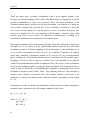
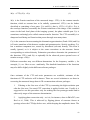
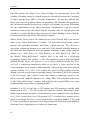
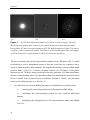
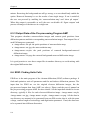
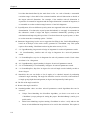
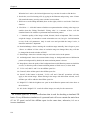
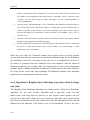
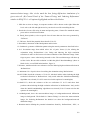
ij = -ji = k
Rather than a real axis and a single imaginary axis as in ordinary, 2D complex numbers,
quaternions have a real axis and three orthogonal imaginary axes. The orthogonal
directions of these axes are defined by the unit quaternions i, j and k. Arithmetic with
quaternions is straightforward, but multiplication does not commute, e.g. jk = - kj. In
analogy to complex numbers, the following properties of a quaternion are defined:
•
Conjugation:
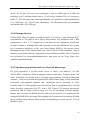
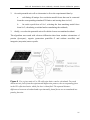
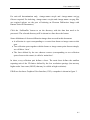
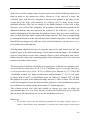
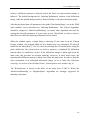
q* = a - xi - yj - zk
•
Sum:
(q1 + q2)* = q1* + q2*
•
Product:
(q1q2)* = q2*q1*
•
Magnitude:
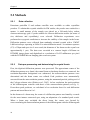
|q| = √(qq*)
•
Real part:
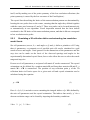
q + q* = 2a
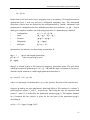
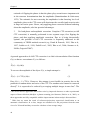
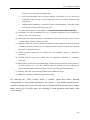
Quaternions are attractive for describing orientations. If:
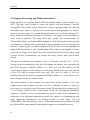
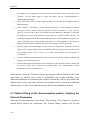
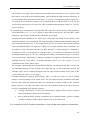
qq* = 1
p + p* = 0
p’ = qpq*
(q is a unit length quaternion)
(the real part of p is zero)
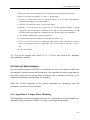
then p’ is related to p by a 3D rotation in imaginary quaternion space. The axis about
which p is rotated to generate p’ is (xi + yj + zk) and the angle of rotation is (2acos(a)).
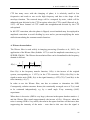
Another useful notation of a unit length quaternion therefore is:
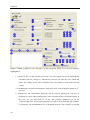
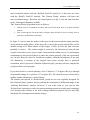
q = cos(κ/2) + xi + yj + zk,
where κ is the angle of rotation and (x,y,z) is the positive direction of the rotation axis.
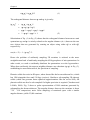
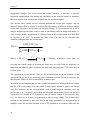
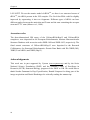
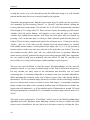
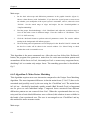
Suppose q1 and q2 are unit quaternions, then both define a 3D rotation of a volume V,
generating two copies V1 and V2, respectively. This being the case, the operation that
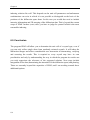
rotates V1 onto V2 is defined by the quaternion product q2(q1*). The angular distance
(∆1,2) between the two objects is given by the real part of the quaternion q2(q1*)
according to:
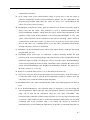
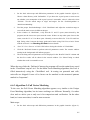
cos(∆1,2 / 2) = (q2q1*+ (q2q1*)*)/2
27