1
Safety:
The first and most important item to
consider before attempting an automated
control system, or even a simple on/off control
for a pump, is safety, both for personnel who
may be working with or near the automated equipment, as
well as to prevent damage to the equipment.
To minimize the risk of potential safety problems, you
should follow all applicable local, state and national codes that
regulate the installation and operation of your control system,
along with the equipment or process it is designed to control.
These codes vary by area and usually change over time. It will
be your responsibility to determine which codes should be
followed and to verify that the equipment, installation,
and operation is in compliance with the latest revision of
these codes.
Most likely your control system will be dealing with
electrical energy, so your first goal will be to eliminate the risk
of fire and electrical shock to personnel. The top organizations
that provide applicable standards and codes are listed below,
but even before you get to this area of safety, it would be wise
to educate yourself as much as possible about electricity and
electrical equipment in general. A good understanding of basic
electricity, including DC and AC theory and practice, Ohm's
Law, etc. will go a long way in helping you understand the
various codes and standards. There are many good
publications and articles on the subject of basic electricity and
some local technical colleges offer courses covering subjects
dealing with basic electricity. Some even offer courses in
Programmable Logic Controllers (PLCs), which can be very
useful when dealing with automated control systems. Also,
many Web sites offer free tutorials covering basic electricity
and PLCs. It would be beneficial to have some understanding
of electronic devices, such as the operation of a transistor and
other solid state devices, as well as understanding of the use
and operation of electrical test and measurement instruments,
such as voltmeters, current loop meters, clamp-on amp
meters, etc.
At a minimum, you should follow all applicable sections
of the National Fire Protection Association (NFPA) fire code,
and the codes of the National Electrical Manufacturer's
Association (NEMA). There may also be local regulatory or
government offices that can help determine which codes and
standards are necessary for the safe installation and
operation of electrical control equipment and systems.
Please keep in mind that if the automated control system
you are developing needs to be accepted in the international
market, the National Electrical Code (NEC), as a publication
of NFPA, is being harmonized with the International
Electrotechnical Commission (IEC) (Web site: www.iec.ch/)
and the European Hazardous Location Ratings. For more
information, check the Instrument Society of America's (ISA)
Web site at www.isa.org. Additional resources on the subject
can be found at www.ul.com/hazloc/
Another area of safety that needs to be considered for
automated control systems is lockout/tagout procedures as
specified by Occupational Safety and Health Administration
(OSHA). "Lockout/tagout" refers to specific practices
and procedures to safeguard operators and maintenance
personnel from the unexpected energization or startup of
machinery and equipment, or the release of hazardous
energy during service or maintenance activities. In order to
have your control system make use of a lockout/tagout
procedure, the design should include the ability to shut off,
neutralize, or isolate any energy source, such as the main
electrical feed, but also any pneumatic, hydraulic or
mechanical energy storage device. The means to do this should
be considered in the initial design of the automated control
system. Additional information can be found on OSHA's Web
site at: http://www.osha.gov/SLTC/controlhazardousenergy/
There are many reasons why the electrical devices that
you will use in the design of your automated control system
should be listed, approved or registered with a testing laboratory. One reason is to ensure that the device meets standards
that will prevent failure that could lead to catastrophic results.
Another reason might be for insurance or compliance
purposes. One of the most specified and premier safety testing
laboratories is Underwriters Laboratories (UL). The most
applicable area of interest for control systems is UL's Standard
for Safety 508A. If your control system panel requires being
built to UL508A, then you will need to contract directly with
UL to become a UL508A panel builder or use an existing
UL508A panel builder. Additional information can be found
at: http://www.ul.com/controlequipment/devices.html
Compliance to UL508A for AutomationDirect products
can be found on our Web site at:
http://support.automationdirect.com/compliance.html
The following are other safety points to consider in the
design of your automated control system:
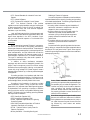
- Emergency Stop - The control system must provide a
quick manual method of disconnecting all system power to
the machinery, equipment or process. The disconnect device or
switch must be clearly labeled "Emergency Stop". After an
Emergency shutdown or any other type of power interruption,
there may be requirements that must be met before the
control system or PLC control program can be restarted. >>
www.automationnotebook.com
1-2