1
og
WARNING
FEATURES & CONTROLS
Avoid possible serious injury or death. When the outboard is trimmed in
or out beyond a neutral steering condition, a pull on the steering wheel
or tiller handle in either direction may result. Failure to keep a continuous
firm grip on the steering wheel or tiller handle when this condition exists
can result in loss of boat control as the outboard can turn freely. The boat
can now “spin out” or go into a very tight maximum turn which, if unexpected, can result in occupants being thrown within the boat or out of the
boat.
Consider the following lists carefully when adjusting the operating angle of your
outboard.
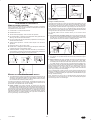
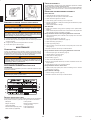
Adjusting the outboard close to the boat transom can:
1. Lower the bow.
2. Result in quicker planing off, especially with a heavy load or a stern heavy boat.
Consider the following lists carefully.
Trimming In or Down Can:
3. Generally improve the ride in choppy water.
1. Lower the bow.
4. Increase steering torque or pull to the right (with the normal right hand rotation
propeller).
2. Result in quicker planing off, especially with a heavy load or a stern heavy boat.
3. Generally improve the ride in choppy water.
5. In excess, lower the bow of some boats to a point at which they begin to plow
with their bow in the water while on plane. This can result in an unexpected turn
in either direction called “bow steering” or “over-steering” if any turn is
attempted or if a significant wave is encountered.
4. Increase steering torque or pull to the right (with the normal right hand rotation
propeller).
5. In excess, lower the bow of some boats to a point at which they begin to plow
with their bow in the water while on plane. This can result in an unexpected turn
in either direction called “bow-steering” or “over-steering” if any turn is
attempted, or if a significant wave is encountered.
Adjusting the outboard away from the boat transom can:
ogc7
1. Lift the bow out of the water.
POWER TRIM AND TILT (CONTINUED)
Power Trim Operation (continued)
2. Generally increase top speed.
WARNING
3. Increase clearance over submerged objects or a shallow bottom.
Avoid possible serious injury or death. Adjust outboard to an intermediate trim position as soon as boat is on plane to avoid possible ejection
due to boat spin-out. Do not attempt to turn boat when on plane if outboard is trimmed extremely in or down and there is a pull on the steering
wheel or tiller handle.
4. Increase steering torque or pull to the left at a normal installation height (with
the normal right hand rotation propeller).
5. In excess, cause boat “porpoising” (bouncing) or propeller ventilation.
6. In rare circumstances, the owner may decide to limit the trim in. This can be
accomplished by repositioning the tilt stop pins into whatever adjustment holes
in the transom brackets is desired.
Trimming Out or Up can:
gog33
1. Lift the bow higher out of the water.
a
2. Generally increase top speed.
3. Increase clearance over submerged objects or a shallow bottom.
4. Increase steering torque or pull to the left at a normal installation height (with
the normal right hand rotation propeller).
5. In excess, cause boat “porpoising” (bouncing) or propeller ventilation.
6. Cause engine overheating if any cooling water intake holes are above the
water line.
c
gog34
b
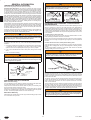
ogs1
POWER TRIM AND TILT (IF EQUIPPED)
a
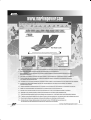
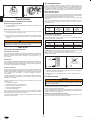
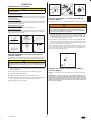
Your outboard has a trim/tilt control called “Power Trim.” This enables the operator
to easily adjust the position of the outboard by pressing the trim switch (a). Moving
the outboard in closer to the boat transom is called trimming “in” or “down.” Moving
the outboard further away from the boat transom is called trimming “out” or “up.”
The term “trim” generally refers to the adjustment of the outboard within the first
1-3
°
20 range of travel (b). This is the range used while operating your boat on plane.
The term “tilt” is generally used when referring to adjusting the outboard further up
out of the water (c). With the engine turned off. the outboard can be tilted out of the
water. At low idle speed, the outboard can also be tilted up past the trim range to
permit, for example, shallow water operation.
4
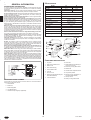
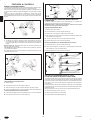
Tilting Operation
To tilt outboard, shut off the engine and press the trim/tilt switch or auxiliary tilt
switch to the up position. The outboard will tilt up until the switch is released or it
reaches its maximum tilt position.
Power Trim Operation
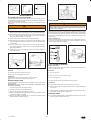
1
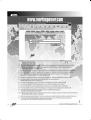
Push in the tilt support pin (a).
With most boats, operating around the middle of the “trim” range will give
satisfactory results. However, to take full advantage of the trimming capability
there may be times when you choose to trim your outboard all the way in or out.
Along with an improvement in some performance aspects comes a greater
responsibility for the operator, and this is being aware of some potential control
hazards.
2
Lower outboard to rest on the tilt support pin.
3
Disengage the tilt support pin, by raising the outboard off the support pin and
pulling out the support pin. Lower the outboard.
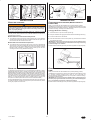
Manual Tilting
If the outboard cannot be tilted using the power trim/tilt switch, the outboard can
be manually tilted.
ogc3
POWER TRIM AND TILT (CONTINUED)
4
Power Trim Operation (continued)
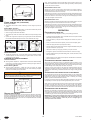
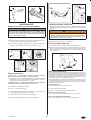
The most significant control hazard is a pull or “torque” that can be felt on the
steering wheel or tiller handle. This steering torque results from the outboard being
trimmed so that the propeller shaft is not parallel to the water surface.
90-10116R40
Turn out the manual tilt release valve 3 turns (counterclockwise). This allows
manual tilting of the outboard. Tilt the outboard to the desired position and
tighten the manual tilt release valve.
Note: The manual tilt release valve must be tightened before operating the
outboard to prevent the outboard from tilting up during reverse operation.
15
GB