1
Environmental Quality Lab
Chemistry Procedures
x
x
5.5
SOP No.: 405
Page 6 of 8
Rev. 2
3-14-09
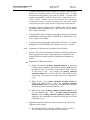
Samples must be analyzed within 24 hours of collection. If not analyzed
immediately after collection, samples must be stored in the dark at 1-4°C,
and then warmed to ambient or room temperature prior to analysis.
Any QC sample analysis (e.g., method blank, laboratory replicate, field
replicate) should be subjected to exactly the same analytical procedures
as those used on individual sample analyses.
x
Unless otherwise specified for specific project or samples, each batch of
up to 20 samples analyzed should include at least one method blank (i.e.,
deionized water) and one sample analyzed in duplicate (i.e., at least 5%
duplicates) as QC samples.
x
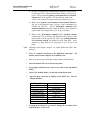
Direct turbidimeter reading (i.e., not corrected for dilution) of a sample
must fall within the range bracketed by the lowest and highest calibration
standards (i.e., 1.0 NTU and 20 NTU). Any sample reading below the
lowest calibration standard’s concentration must be reported as less than
1.0 NTU, the reporting limit (see Section 6.1). For any direct sample
reading above the highest calibration standard’s concentration, an aliquot
of the sample must be diluted with particle free water until the reading
falls within the calibration range.
CORRECTIVE ACTIONS
5.5.1
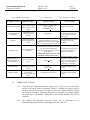
If any of the QC requirements listed in Section 5.4 are not satisfied, the
analyst must consult with the Laboratory Director. Normally the activity
must be repeated, after corrective actions are taken to correct any
obvious problems, until the QC results are acceptable. If repeating the
process is not possible (e.g., sample spilled), the results report will
include a discussion of the problem and the client will be consulted.
5.5.2
The problem and associated corrective actions will be documented on a
Nonconformance and Corrective Action Report (see EQL SOP 201).