1
10/100 and 1Gig Ethernet
Media Access Controller User’s Guide
Lattice Semiconductor
Introduction
This document serves as a guide containing technical information about the Lattice 10/100 and 1Gig Ethernet
Media Access Controller (MAC) IP cores.
The 10/100 and 1Gig Ethernet MAC cores come with the following documentation and files:
• Data sheet
• Protected netlist/database
• Protected RTL simulation model
• Source files for instantiating the core
Core Specification
Features
• Compliant to IEEE 802.3z Standard
• Generic Host Interface
– Configurable 8-bit or 16-bit Data Bus Widths
• 16-bit Wide Internal Data Path
• Generic Transmit and Receive FIFO Interface
• Full-duplex Operation in Gigabit Mode
• Full- and Half-duplex in 10/100 Mode
• Transmit and Receive Statistics Vector
• Programmable Inter Packet Gap (IPG)
• Multicast Address Filtering
• Supports
– Full-duplex Control Using PAUSE Frames
– VLAN Tagged Frames
– Automatic Re-transmission on Collision
– Automatic Padding of Short Frames
– Multicast and Broadcast Frames
– Optional FCS Transmission and Reception
– Optional MII Management Interface Module
• Supports Jumbo Frames up to 8192 kbytes
• Reference Design for GMII to RGMII Bridge
– Reduced pin count Gigabit Media Independent Interface
General Description
The Ethernet Media Access Controller (MAC) core can be configured to operate in either the Gigabit mode (1000
Mbits/sec data rate) or the Fast Ethernet mode (10/100 Mbits/sec data rate). Netlist configurations of this core
operate only in either the Gigabit mode or Fast Ethernet mode. The netlist cannot auto-negotiate between the two
different modes.
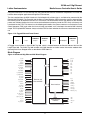
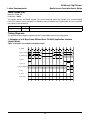
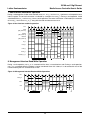
The Ethernet MAC transmits and receives data between a host processor and an Ethernet network. The main function of the Ethernet MAC is to ensure that the Media Access rules specified in the 802.3 IEEE standard are met
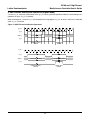
while transmitting a frame of data over Ethernet. Figure 2 shows the transmission of data on the Ethernet network
2