1
The RUP proposes an iterative approach to software development, which
means that a project is divided into several small projects that run
sequentially, one directly after another. Each iteration has a well-defined
set of objectives, and concludes by delivering an executable that is a step
closer to the final product than the last one. Each iteration contains
elements of requirements management; analysis and design;
implementation; integration; and testing.
The RUP1 provides a structured approach to iterative development that
divides a project into four phases: Inception, Elaboration, Construction,
and Transition. The objectives of the phases are:
●
Inception: Understand what to build.
●
Elaboration: Understand how to build it.
●
Construction: Build a beta version of the product.
●
Transition: Build the final version of the product.
Each phase contains one or more iterations, which focus on producing the
technical deliverables necessary to achieve the business objectives of that
phase. Each phase includes as many iterations as it takes to address the
objectives of that phase, but no more.
This evolutionary approach to software development can be seen as an
umbrella for all the principles of software development described in this
article. Some of the principles can be applied outside the context of
iterative development, and iterative development can be done without
applying all of the principles. There is, however, a strong correlation
between successful iterative development and the principles described in
this article, and to optimize your implementation of an iterative approach,
you should attempt to apply as many of the principles as is feasible for
your project.
1. Attack Major Risks Early and Continuously…Or
They Will Attack You
As Tom Gilb said, "If you don't actively attack the risks, they will actively
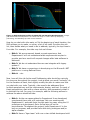
attack you."2 As Figure 1 shows, one of the prime benefits of the iterative
approach is that it allows you to identify and address major risks early in
the project.
Why address top risks early on? Unaddressed risks mean that you are
potentially investing in a faulty architecture and/or a nonoptimal set of
requirements. This is bad software economics. In addition, the amount of
risk is directly correlated to the difference between the upper and lower
estimates of how long it will take to complete a project. To come up with
accurate estimations, you need to identify and address risks up front.