1
Cpl
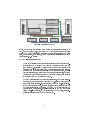
itself consists of three parts:
1. Tasks, which represent threads of execution in a plan to, ultimatively,
achieve goals like navigate to position
(x, y);
tasks are organized in trees
as it's common that a task requires additional sub tasks for its accomplishment.
2. Fluents (and uent-nets), which act as a synchronization abstraction for
convenient inter-task notication on value changes an essential ingredient
of autonomous agents, considering their need to react on exogenous events.
3. Control structures of the language, which are implemented on top of tasks
and uents.
Cram Designators
Designators are symbolic descriptions of entities such as objects (mugs,
plates, ...), locations or parameterizations of actions.
Designators unify
symbolic and grounded concepts in a plan with the parameterization of
the lower level components, which is necessary to eciently reason about
the execution of plans.[4]
Cram Process Modules
Process Modules provide interfaces to lower-level control processes that
can be activated, deactivated and parameterized by the high-level control
program. They resolve symbolic properties of designators and generate the
parameterization of the low-level control routines, by taking the current
belief state into account.[4]
Cram Execution Trace
The execution trace records internal state of the control program and
the belief state at any point in time. The information is useful not only
for debuggability but also provides the mechanisms for complex monitoring and failure handling that is not based on local failures and exception
handling but on the expressive formulation of error patterns in rst order
logics.[4]
Cram Reasoning
The reasoning component includes a bridge between
Cpl and KnowRob[10],
an extended knowledge base, by incorporating the foreign language interface of
Swi-Prolog
into Common Lisp.
component based on the
Rete
It further includes a reasoning
algorithm and a library of predicates that
allow for reasoning about plan execution, based on the execution trace.[4]
3